You can repeat this analysis yourself pretty easily.
Just do an open database search in Brand Radar, head to the “Cited pages” report for your desired AI assistant, and export the top 1,000 cited pages.
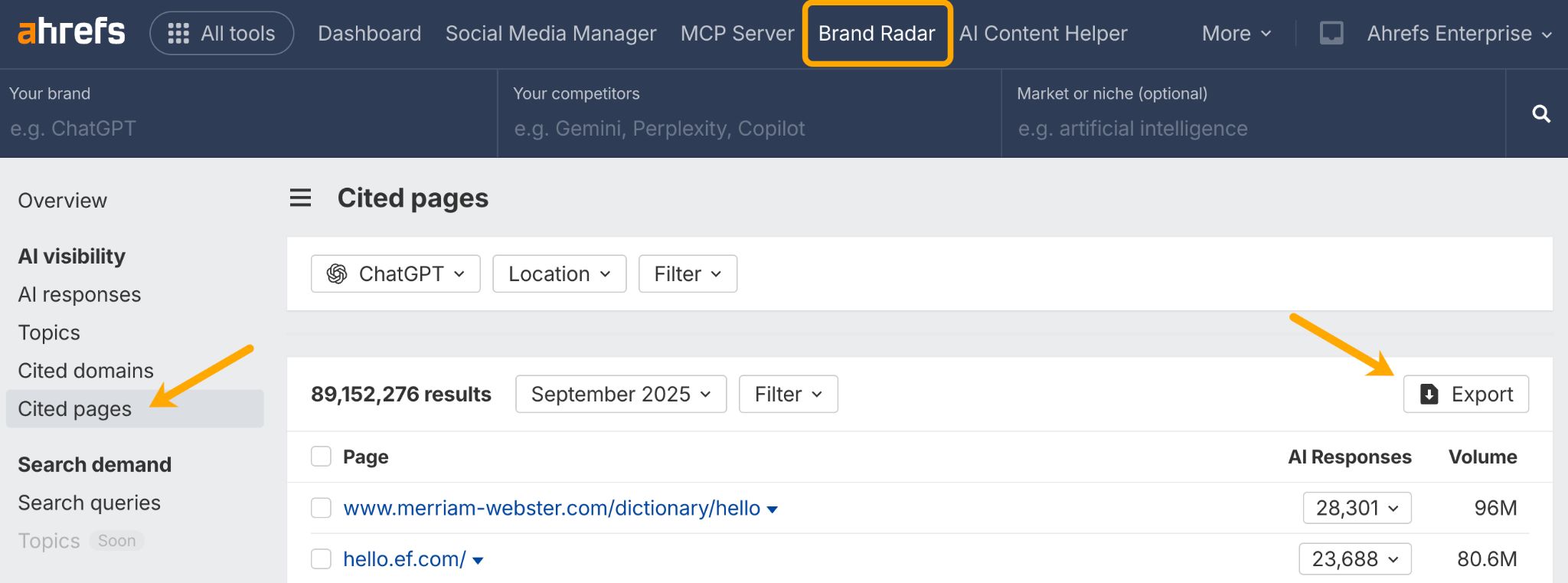
Then run the cited pages through our Batch Analysis tool to grab more organic data on each URL.
You can use Claude to help analyze that data, and even write scripts for Google Colab to fetch and parse content freshness signals for each cited URL.
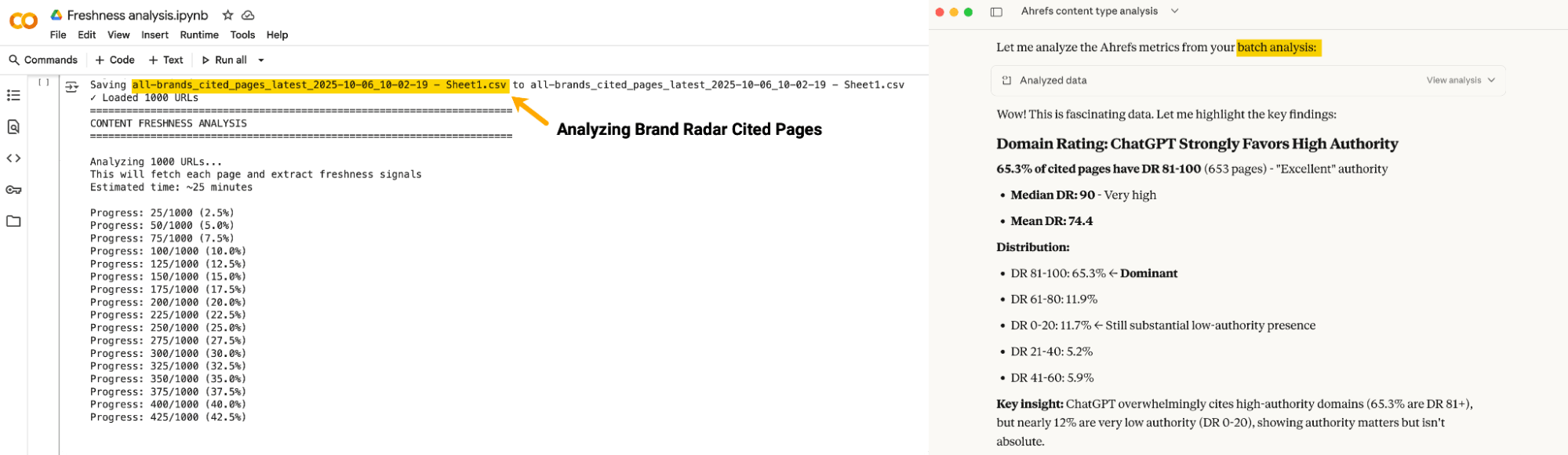
I did exactly that. Here’s what I found…
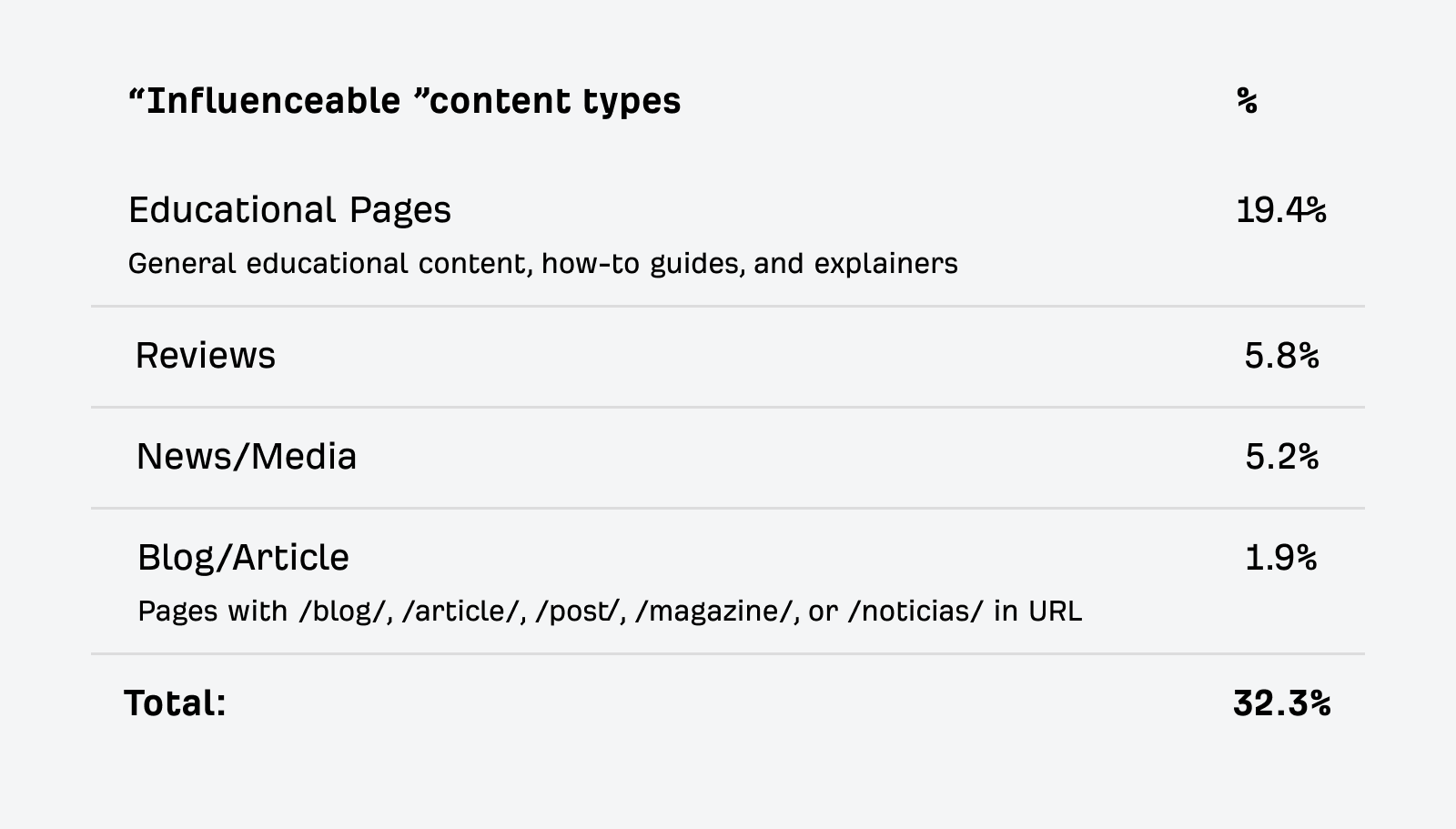
In other words, roughly two-thirds of ChatGPT’s top citations are effectively off-limits to traditional outreach tactics—they’re organizational pages, reference sites, and other “dead” citations you can’t realistically influence.
Further reading
Yeşilyurt identified a URL_freshness_score in ChatGPT that favors newer content, and cited studies showing that artificially refreshing publication dates can improve AI ranking positions by as much as 95 places.
That said, my data showed nearly one in four cited pages were updated over a year ago—suggesting that useful, well-structured older content can still maintain visibility in AI.
Further reading
Nearly one-third of ChatGPT’s citations point to pages with no traditional search visibility.
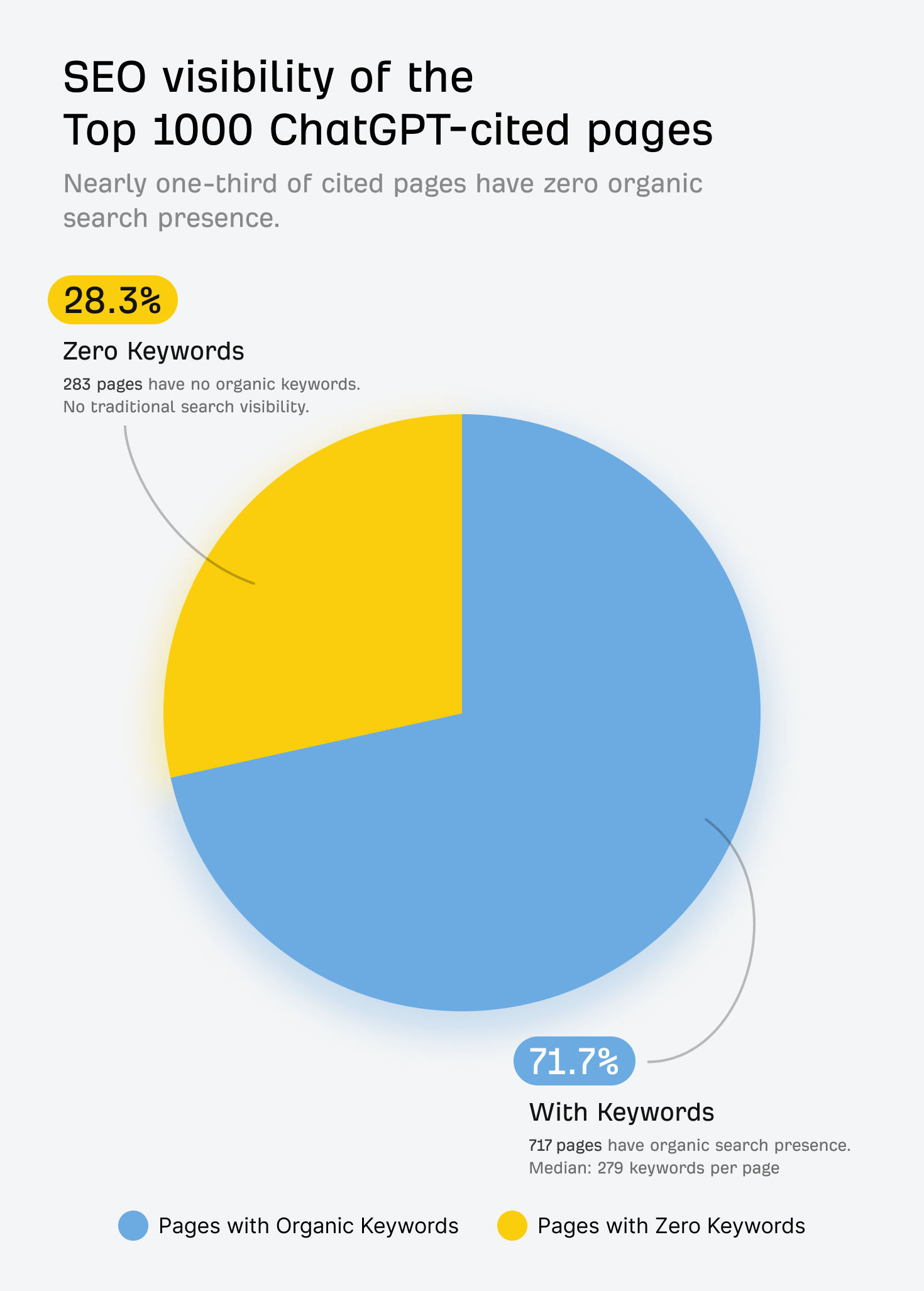
Here are some possible explanations for this:
Freshness: Some zero-keyword pages are potentially fresh content not yet ranked by search engines. ChatGPT may discover and cite new content before it accumulates search rankings.
Niche topics: Citations may cover specific, long-tail topics with minimal search demand. They answer questions accurately but don’t attract significant search traffic. This also applies to fan-out queries—even when someone asks ChatGPT about a popular topic, the conversation often branches into more specific subtopics where few pages directly target those angles.
Different discovery: ChatGPT tends to access and evaluate content differently than search engines, seemingly prioritizing accuracy, freshness, and relevance over popularity signals like backlinks.
The reality is it’s likely a combination of all three. Fresh content, niche topics, and alternative quality signals all contribute.
Further reading
The pages that do rank display some interesting patterns. Here are the key takeaways:
- Site authority really matters: 65.3% are DR 81+, median DR 90
- But page authority doesn’t: 67.3% have UR 0-10 and a median UR only 6. ChatGPT cites pages from authoritative domains, but not necessarily the most linked-to pages on those domains.
- Pages are keyword-rich: Median 279 keywords
- Most have strong backlink profiles: Median 70 referring domains
- Half have high search visibility: 52.1% rank in top 3 for keywords
- Low-authority exceptions exist: 11.7% have DR 0-20
ChatGPT heavily favors pages from high-authority domains that have strong backlink profiles and rank well in search, but will cite low-authority sources for specific relevant content.
Wrapping up
ChatGPT’s top citations skew toward newer content, include almost a third of pages with no organic visibility, and are dominated by reference sites you can’t easily influence.
The data suggests your best bet for ChatGPT visibility is getting mentioned in fresh, specific content that falls into those influenceable categories.
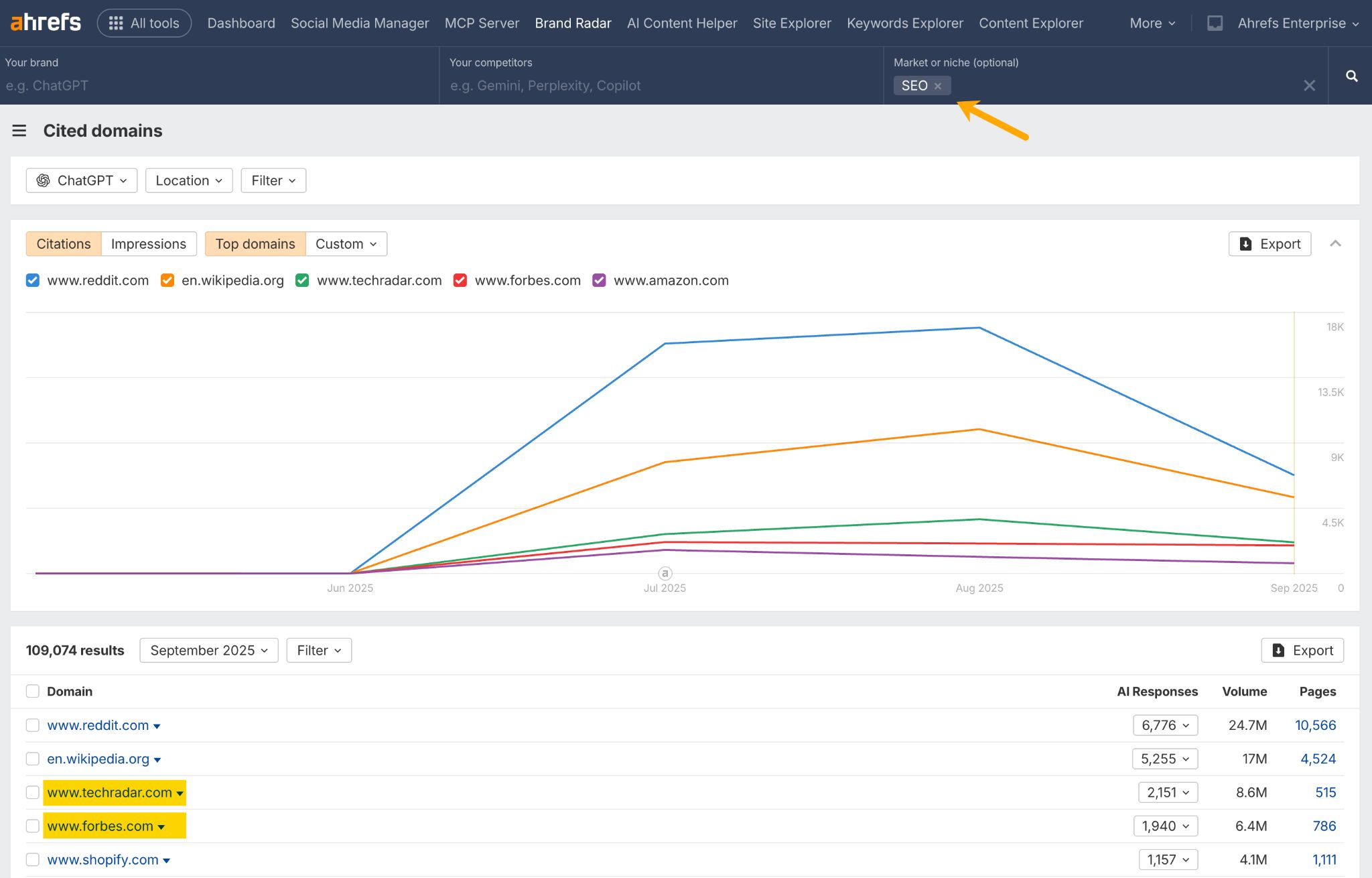
To find outreach opportunities, you can use Brand Radar. Just drop in your market or niche, head to the cited pages report and look out for the top blogs, publications, and review sites.
Similar Posts
The 100 Most Searched People on Google in 2026
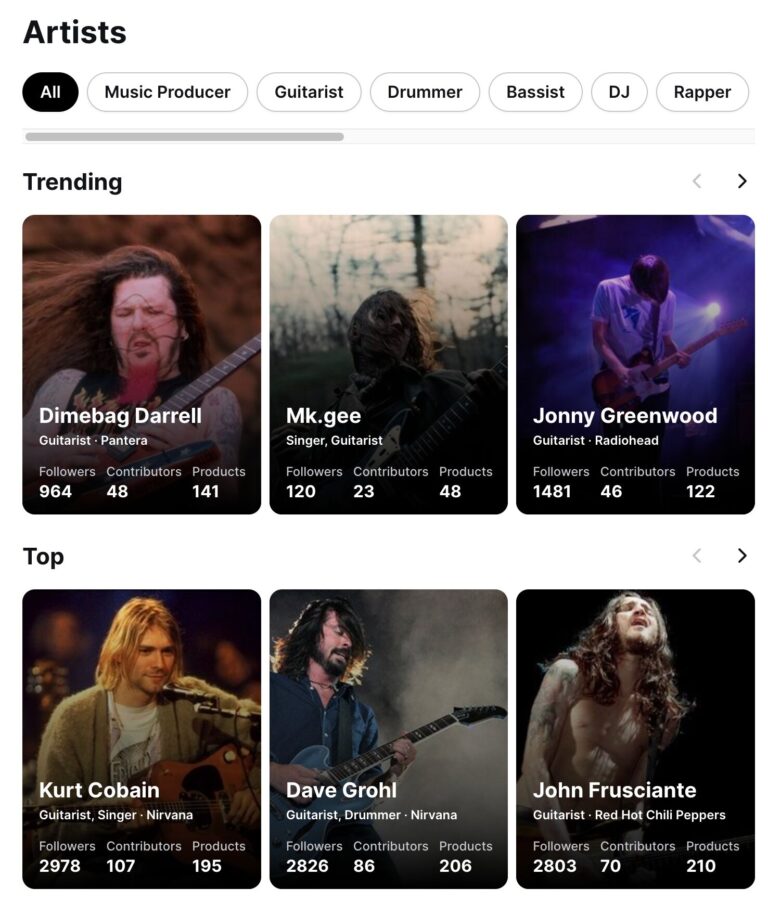
Get the week’s best marketing content These are the 100 most searched people, along with their monthly search volumes. Equipboard has taken this idea seriously and created a site around the gear used by professional musicians. You can do the same for your industry too. Here’s how: Go to Keywords Explorer Enter the names of…
An Insider’s Guide to Event Sponsorships (From a Company That Spent $500K)
The secret weapon behind a successful event isn’t just great speakers, a cool venue, or sold-out tickets. It’s also the sponsors who bring in important revenue while adding credibility to your event. When big-name sponsors put their logo on your event materials, they’re essentially saying: “This event matters.” We know this firsthand because event sponsorships have…
AI Overviews Cite AI-Generated Content More Than Human Writing
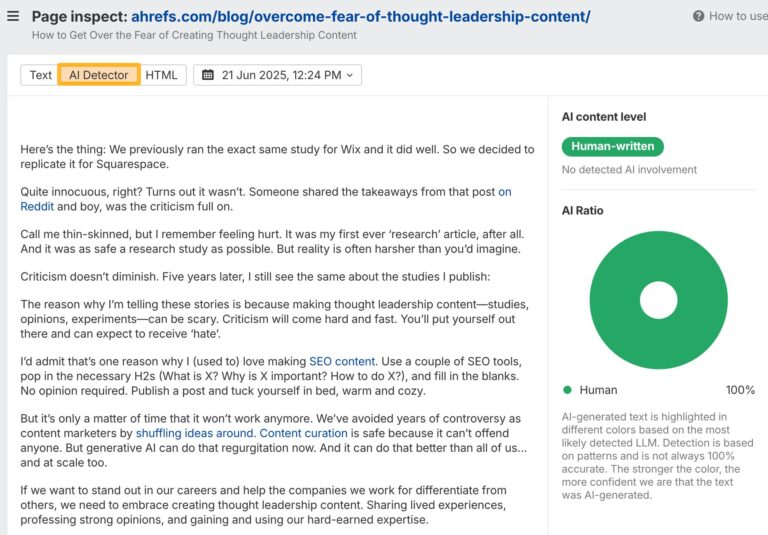
AI Overviews are AI-generated content, which means they can contain hallucinations. Google uses “grounding” to improve their accuracy, but according to our research, AI Overviews are more likely to cite AI-generated content than human-written content. Here’s what we found: Keywords Explorer and extracted the top three cited links. 1.9 million URLs in total, of which we…
AI Overviews Have Doubled (25M AIOs Analyzed)
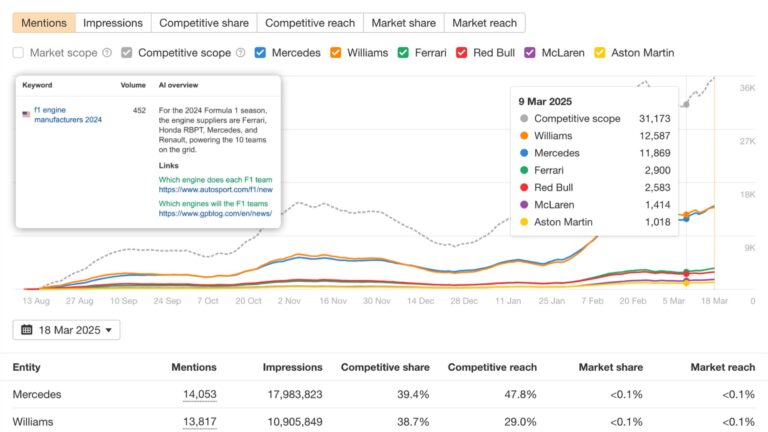
Lately, we’ve heard murmurings that Google’s March Core Update has led to an uptick in AI Overviews¹ ² This chimes with what we’re seeing in Ahrefs Brand Radar, our new marketing intelligence tool which lets you track your brand presence in AI search. We analyzed 25M AI overview keywords in the two-month window of our…
LLMs Don’t Reward Originality, They Flatten It
Originality is idealized, especially in tech and marketing. We’re told to “think different,” to coin new terms, to pioneer ideas no one’s heard before and share our thought leadership. But in the age of AI-driven search, originality is not the boon we think it is. It might even be a liability… or, at best, a…