Digital marketing analytics helps you understand which of your marketing tactics work and which don’t. The more you know about the effects of your efforts, the better you can allocate your time and budget.
Basic digital marketing analytics is easier than it sounds and provides enough information to evaluate your performance, create reports, and plan your strategy. What’s more, you can do it with free tools, and the process becomes even simpler when using my AI chatbot called DataDecode.
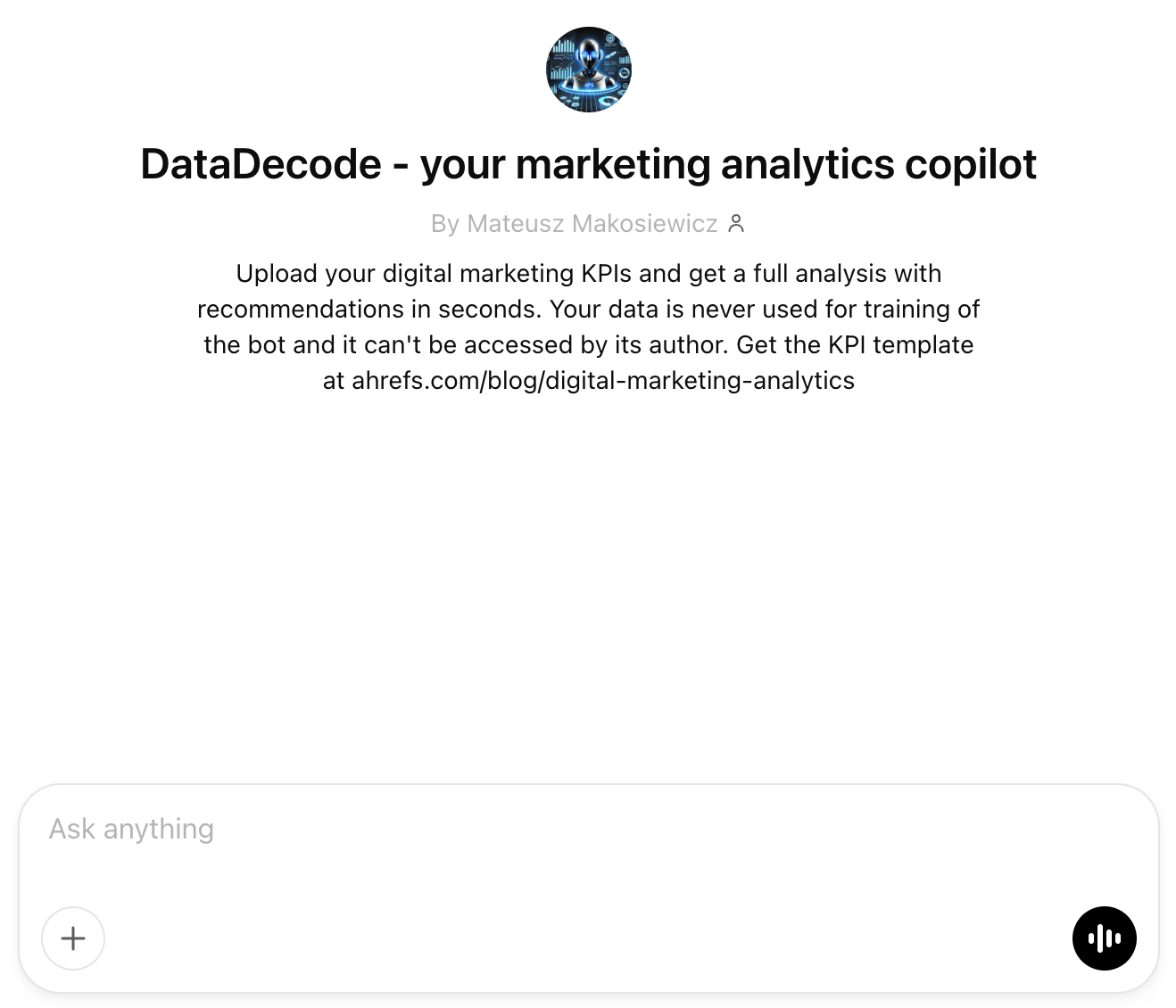
This bot is ideal for beginner marketers and business owners doing marketing on their own. Honestly, this is something I wish I had when I started marketing over a decade ago. Let’s dive in!
- Identify trends and anomalies in your metrics.
- Forecast future performance based on past data.
- Give you an overall assessment of your strategy and suggest what to fix.
By the way, your data is safe. OpenAI does not store conversation data permanently or use it to train future models, and I won’t have access to any of the conversations.
The bot uses a Google Docs template with a set of easy-to-follow essential KPIs you can fill in using free tools (I’ll cover these tools and metrics in a bit).
Click here to copy the template or get the xlsx file for tools like Excel and Numbers.
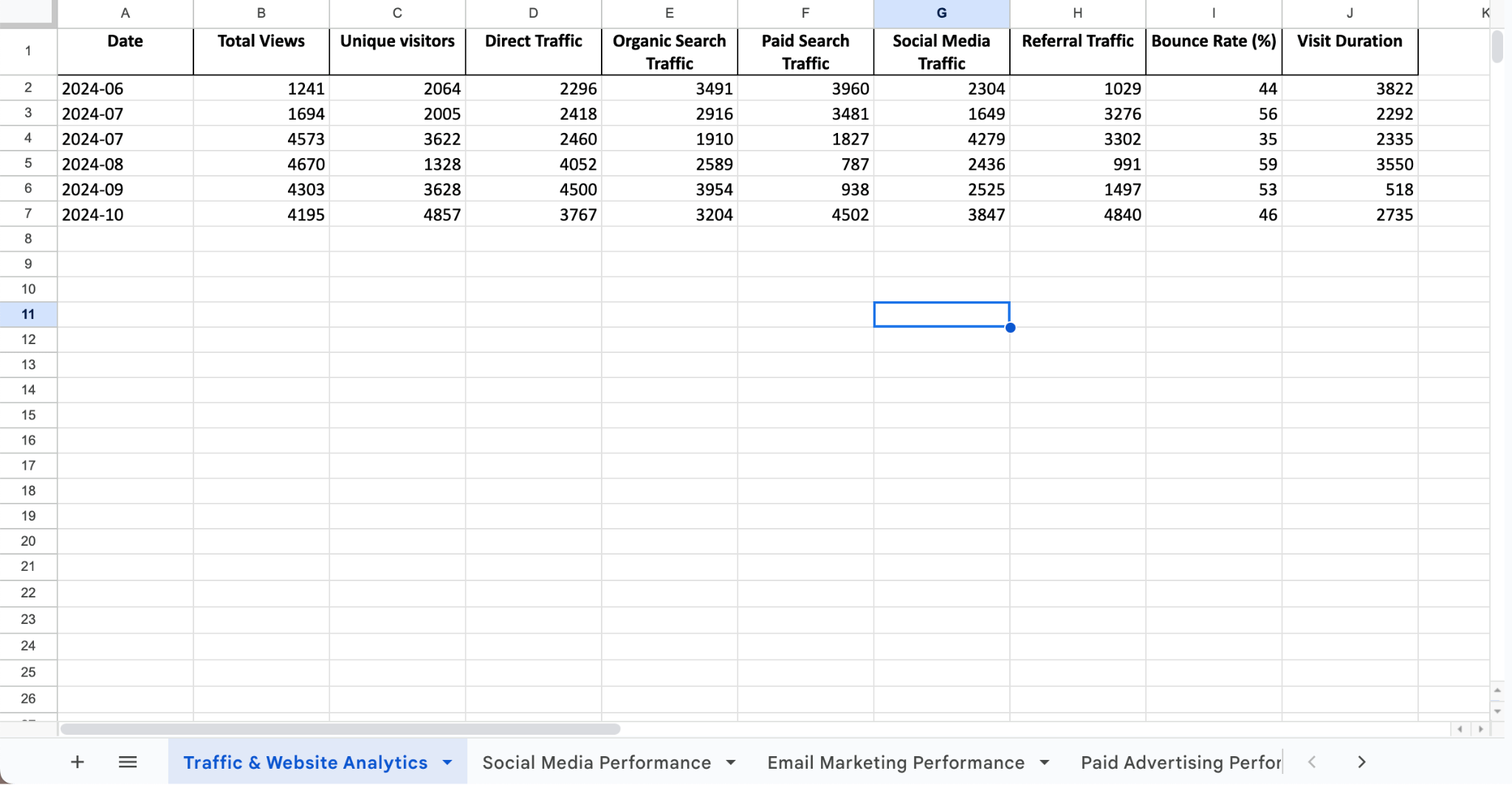
To give you an idea of how the bot works, here’s an example analysis.
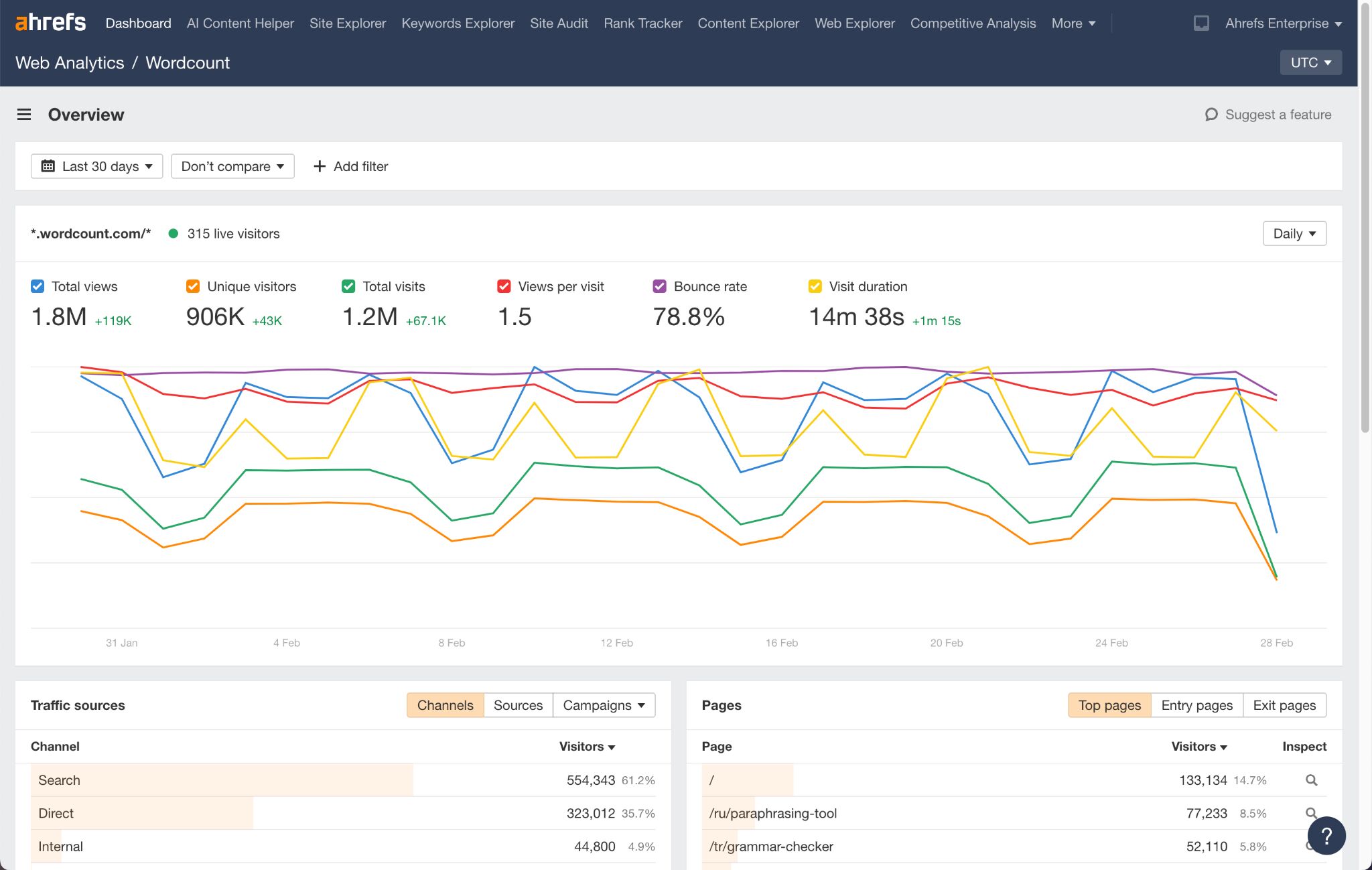
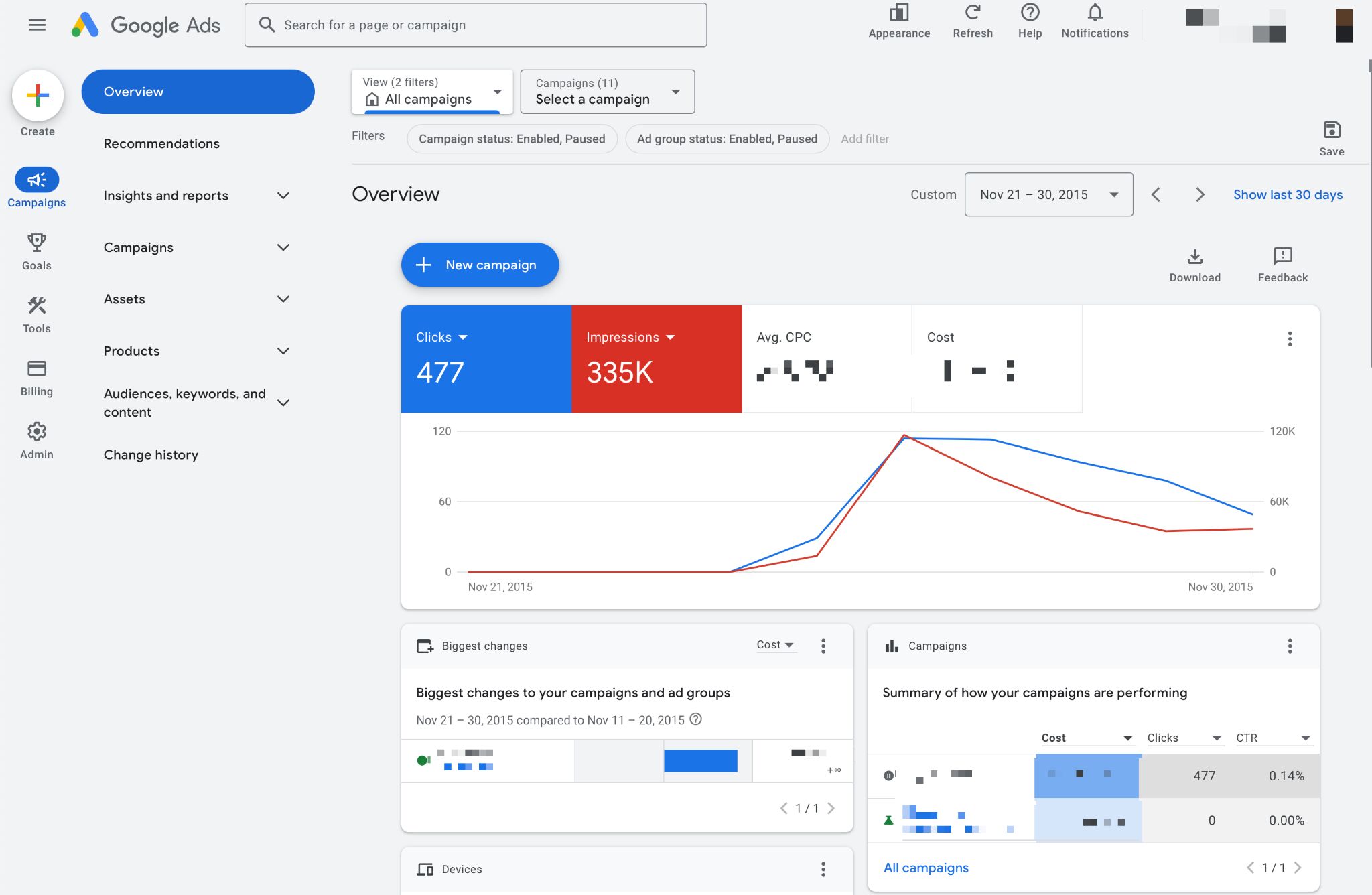
To start, I filled the template with data I took mostly from Website Analytics, part of the free Ahrefs Webmaster Tools. You can use Google Analytics or whatever analytics tool you like.
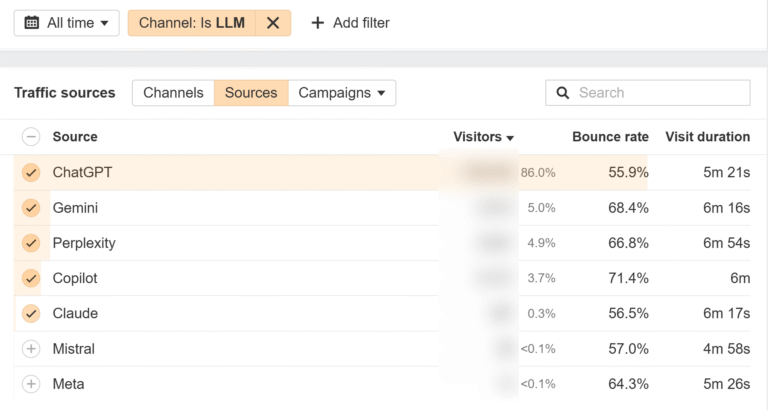
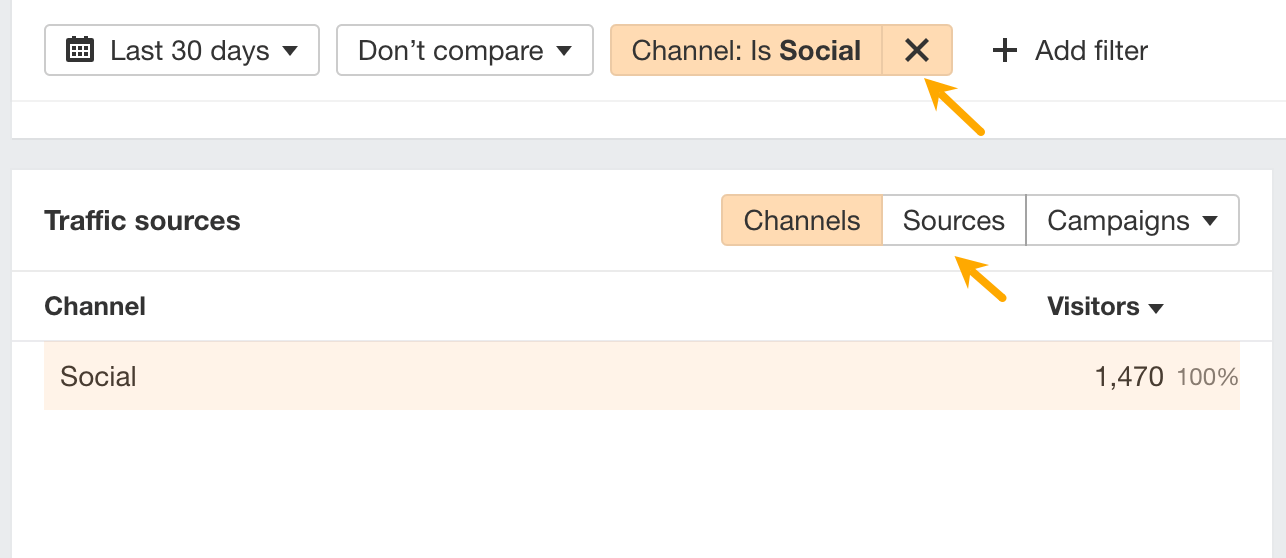
For instance, to get data on visitor behavior coming from YouTube, I picked Social on the list of channels and clicked on the Sources tab (click on the X in the filters above to go back to the previous view).
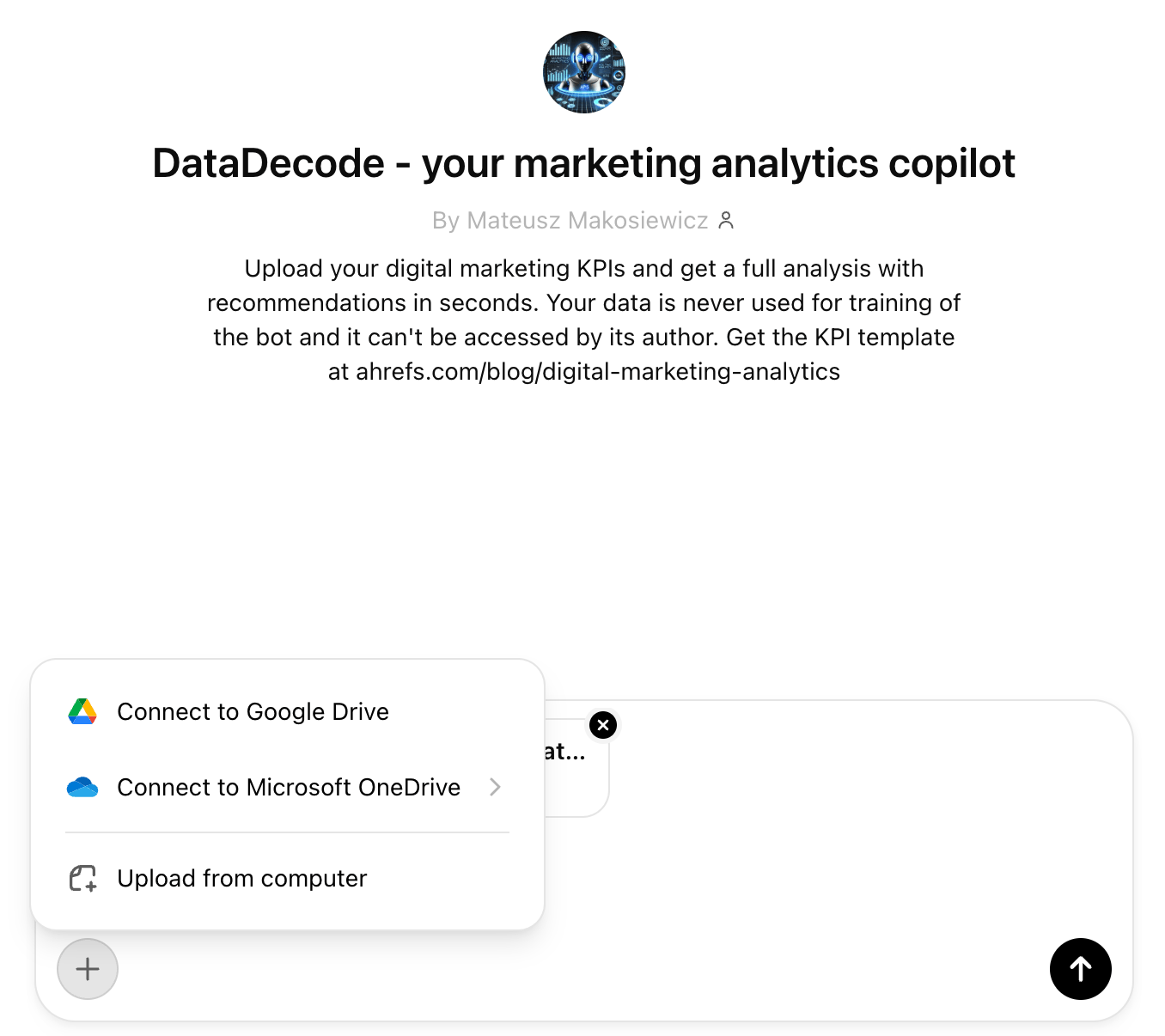
Next, I downloaded the template from Google Sheets in the xlsx format (use only this format) and uploaded it to the DataDecode bot. For a more seamless process, you can connect the bot to Google Drive or OneDrive.
The bot provided a comprehensive analysis of my metrics across website traffic, social media engagement, paid advertising performance, email marketing results, and revenue figures.
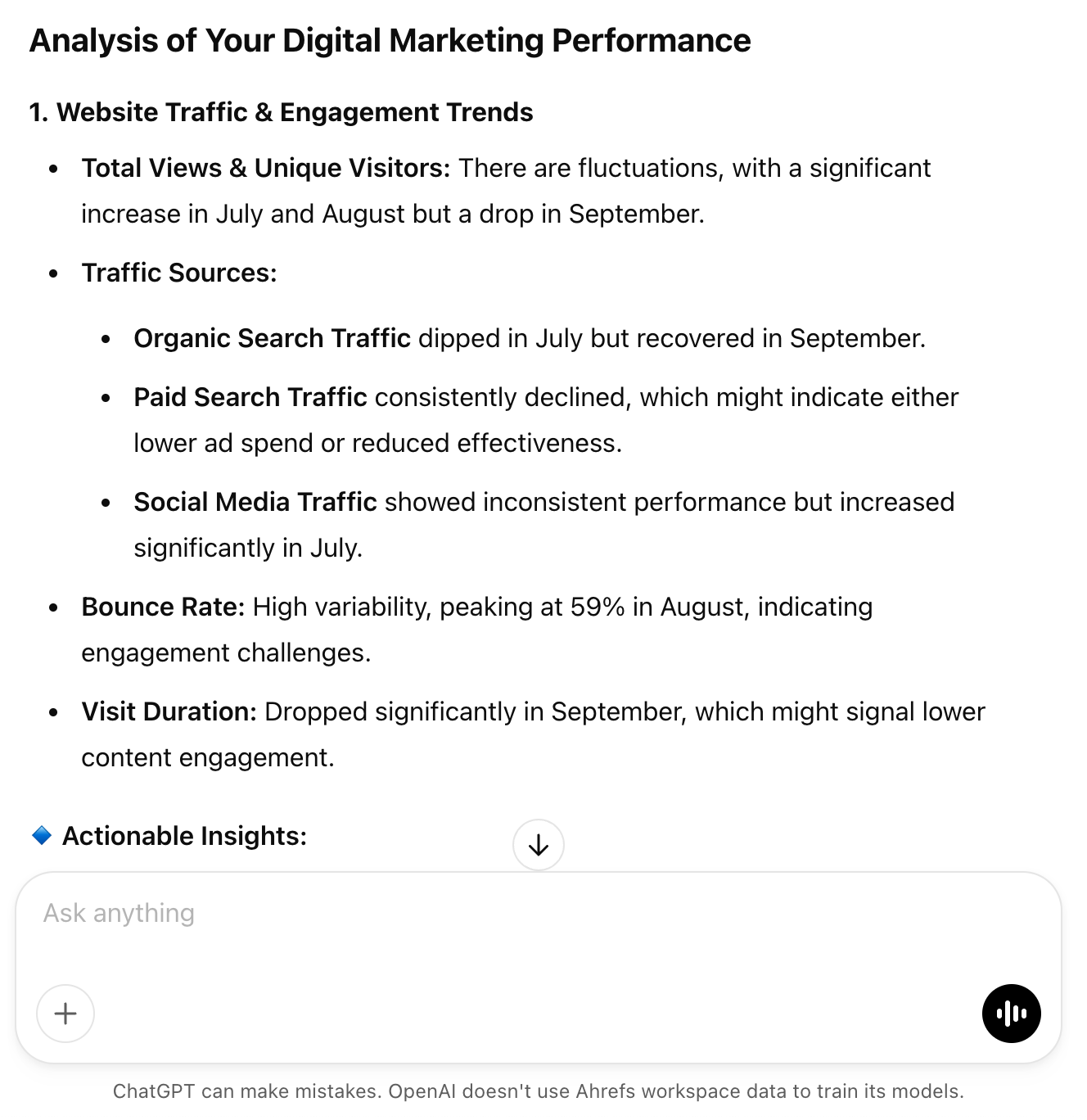
And provided a summary.
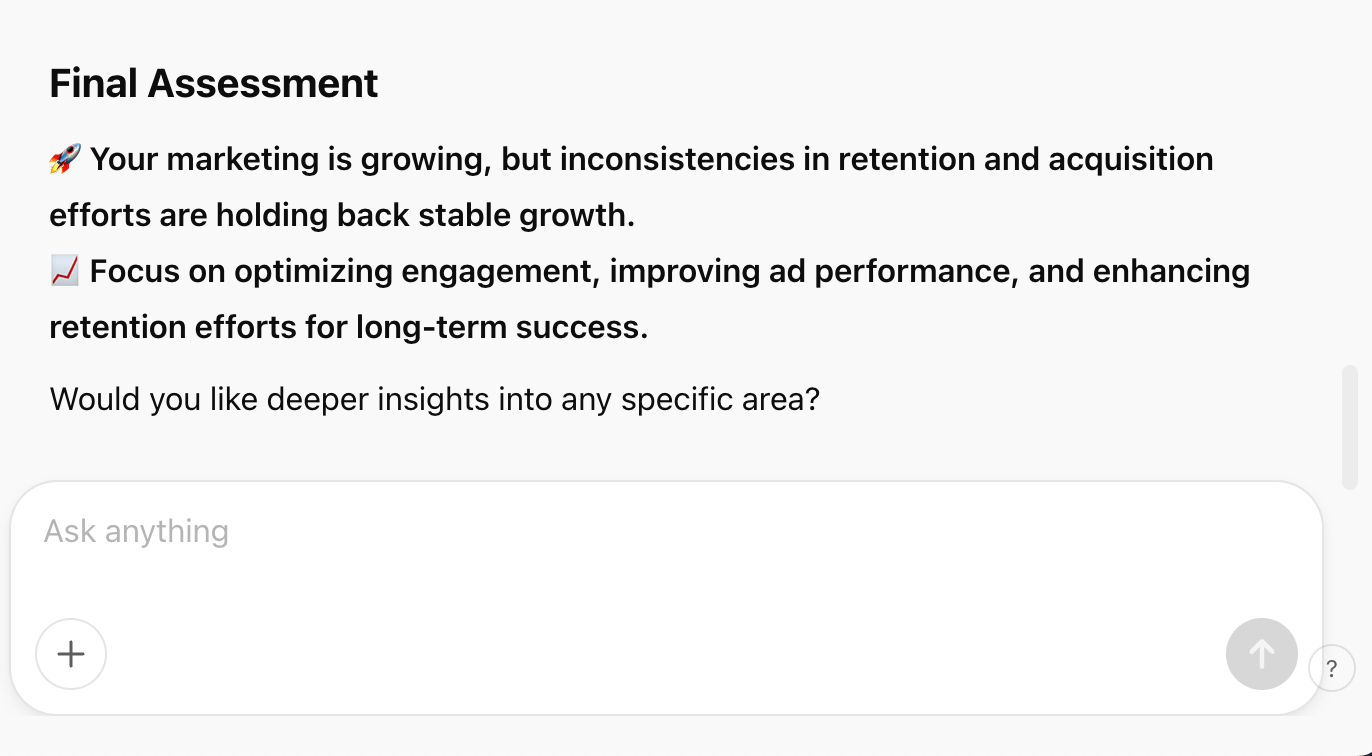
DataDecode mentioned optimizing product engagement, which caught my attention. I asked a follow-up question, and the bot returned a detailed plan, including tactics and even a timeframe.
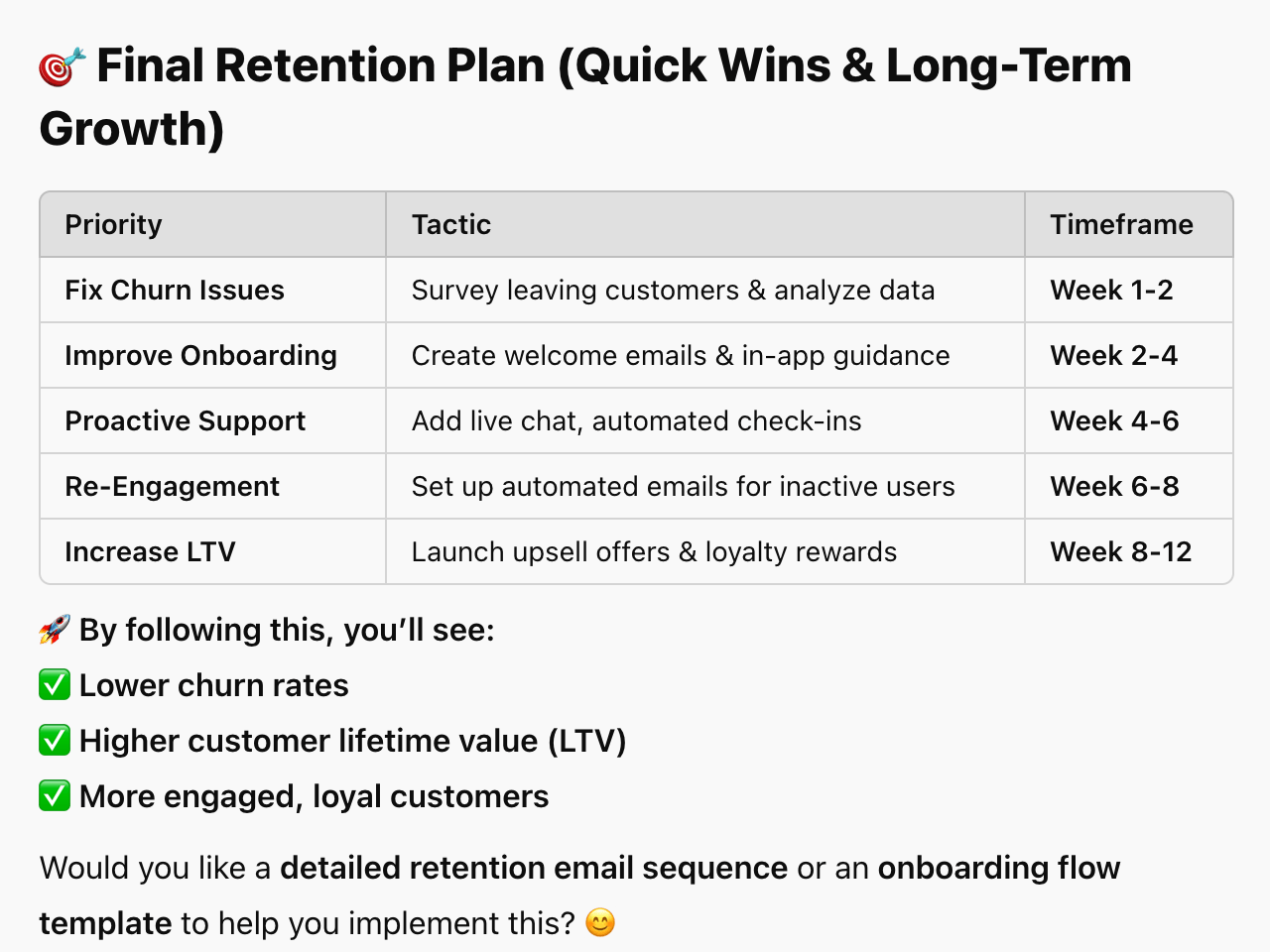
Just remember, while the bot can crunch your numbers like a pro, it doesn’t know the soul of your product or the marketing tactics you’ve tried. Think of it as a smart advisor giving you a solid starting point and helping you explore options, but trust your gut for the final call.
One last thing — the secret to making sense of all these marketing numbers is sticking with it over time. Your data weaves a story about your business, and you’ll spot the plot twists much easier if you follow along chapter by chapter. Set aside a little time each month to sit down with your metrics.
Try it out and let me know what you think!
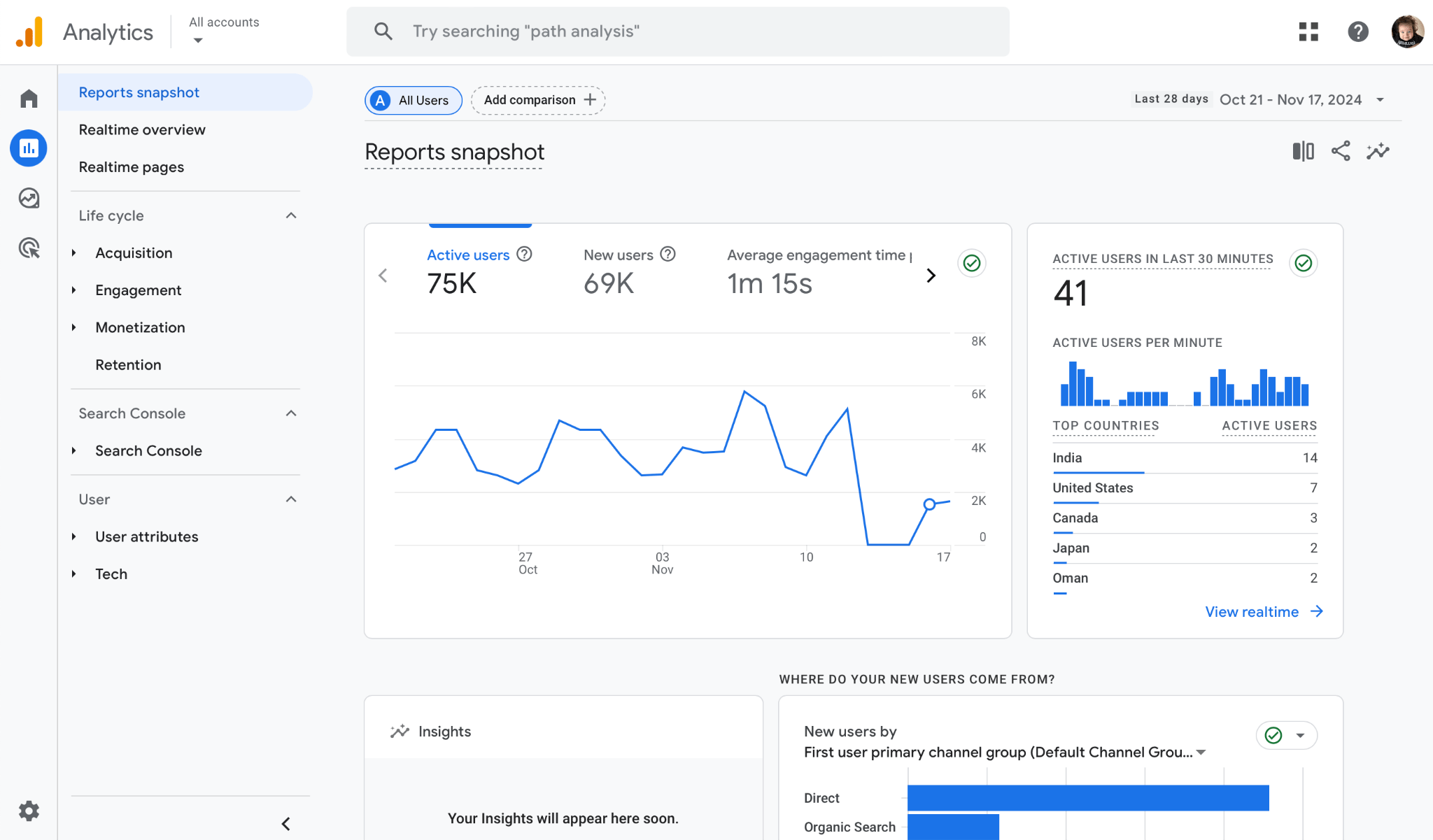
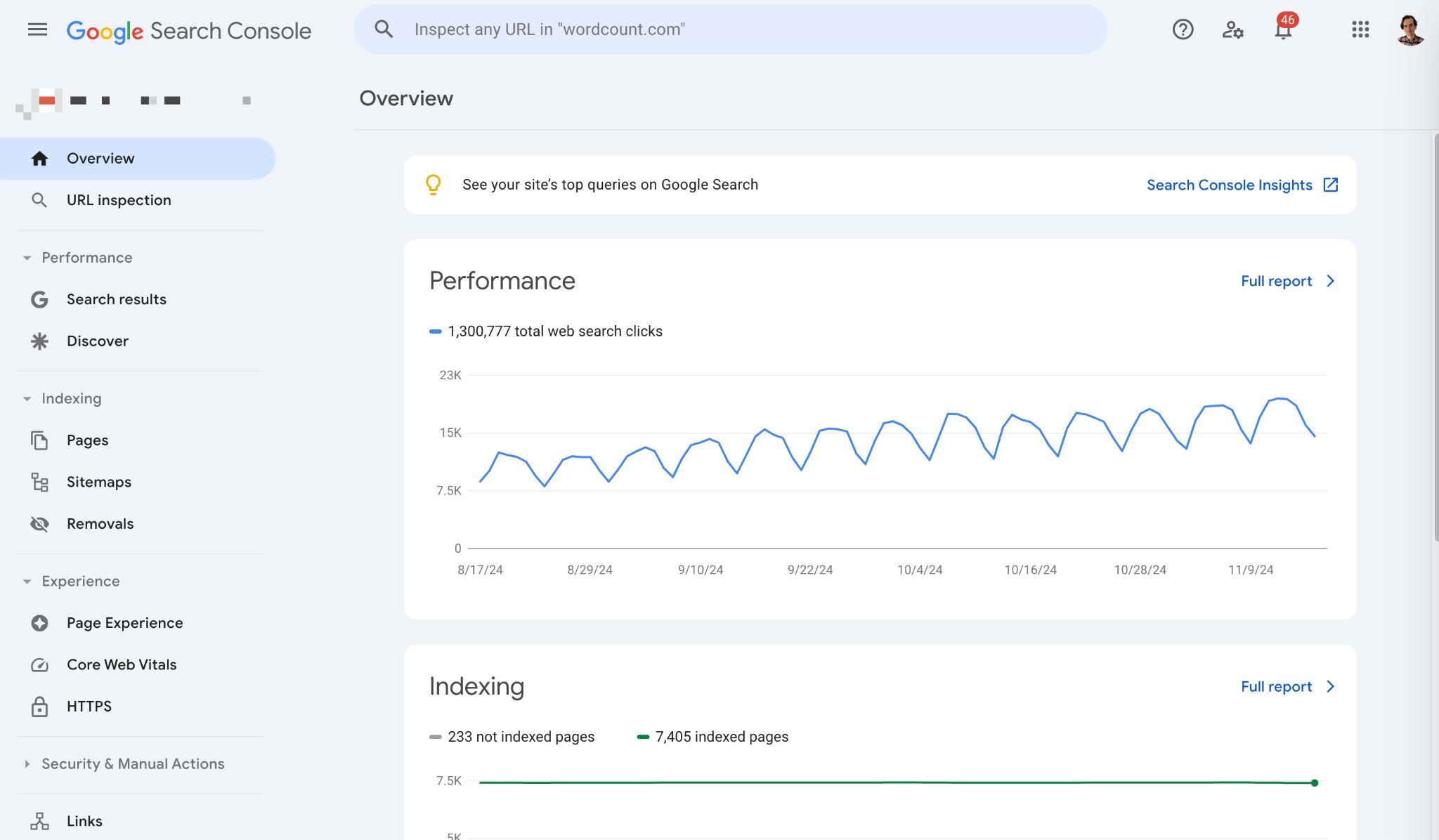
Google Search Console: Helps monitor search performance and site indexing.
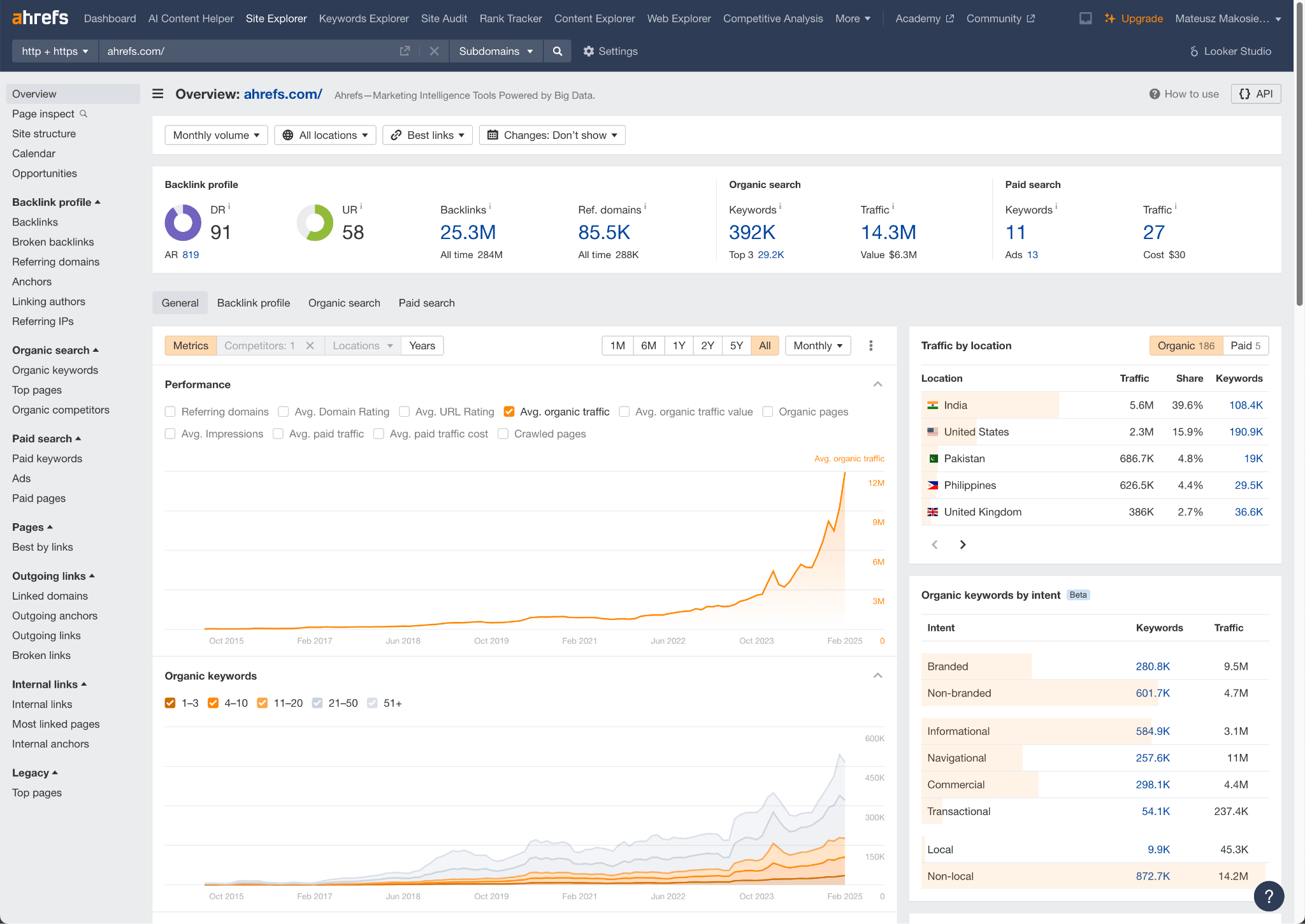
Ahrefs Webmaster Tools: This product combines GA4’s essential functionality in a privacy-friendly version with a more robust SEO solution than GSC.
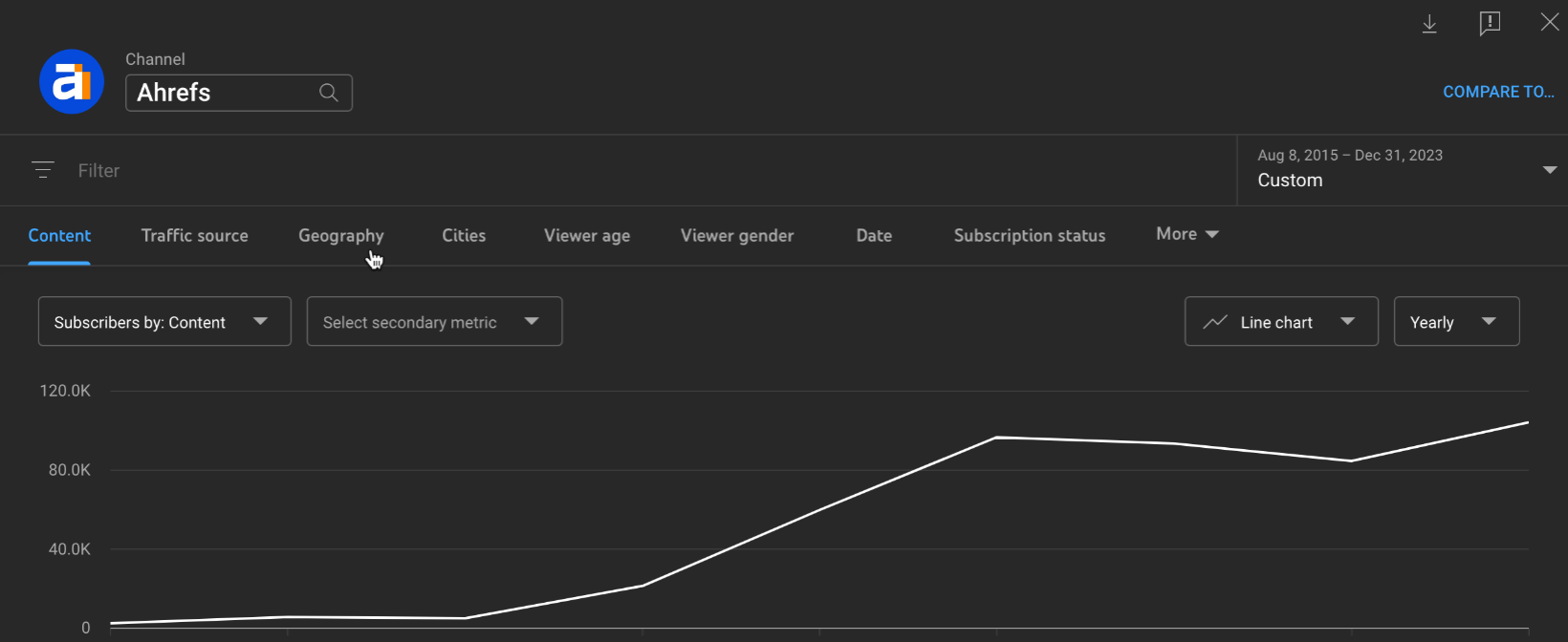
Social media insights: All social media platforms offer free analytics dashboards. You can also use aggregators like Buffer (free plan available).
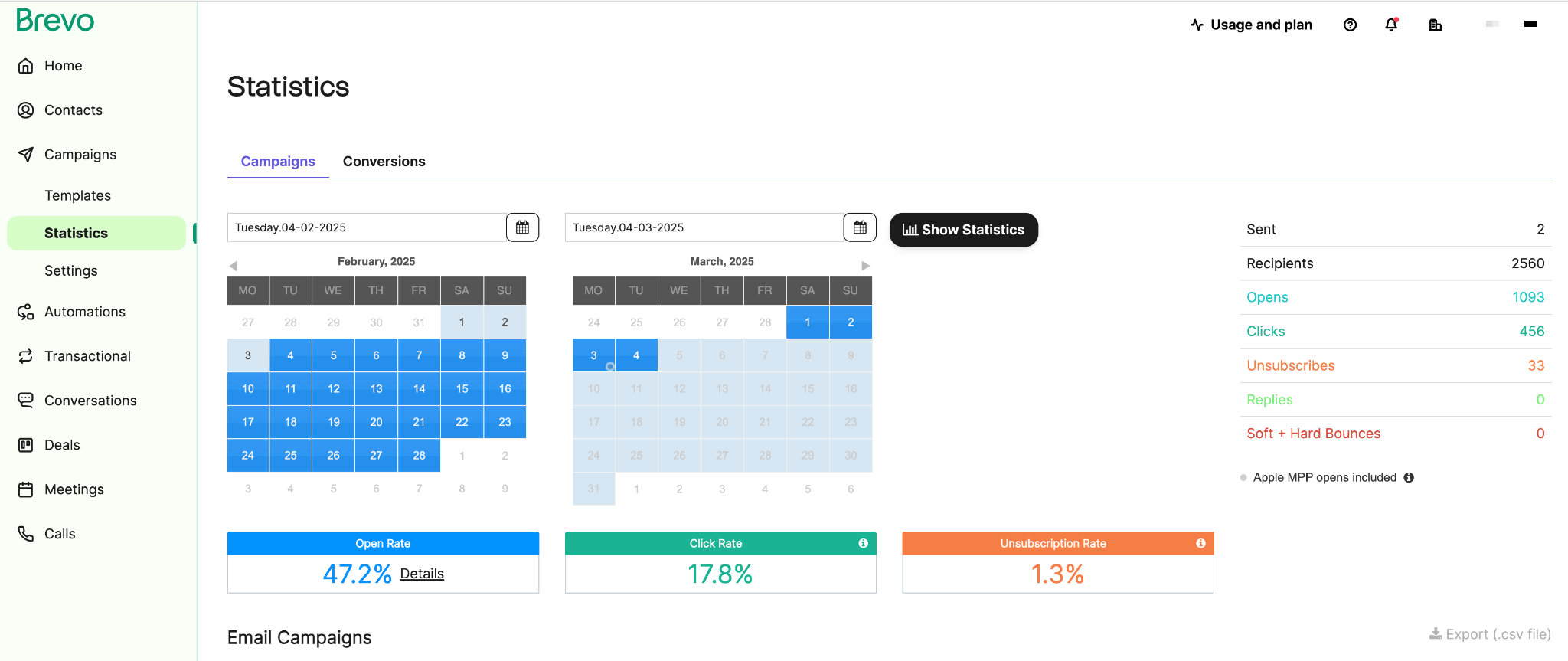
Email marketing platforms: as long as you can get a free account, the essential analytics will be included (for example Brevo, Mailchimp, Mailer Lite).
Google Ads & Meta Ads Insights: Tracks ad performance with free reporting tools.
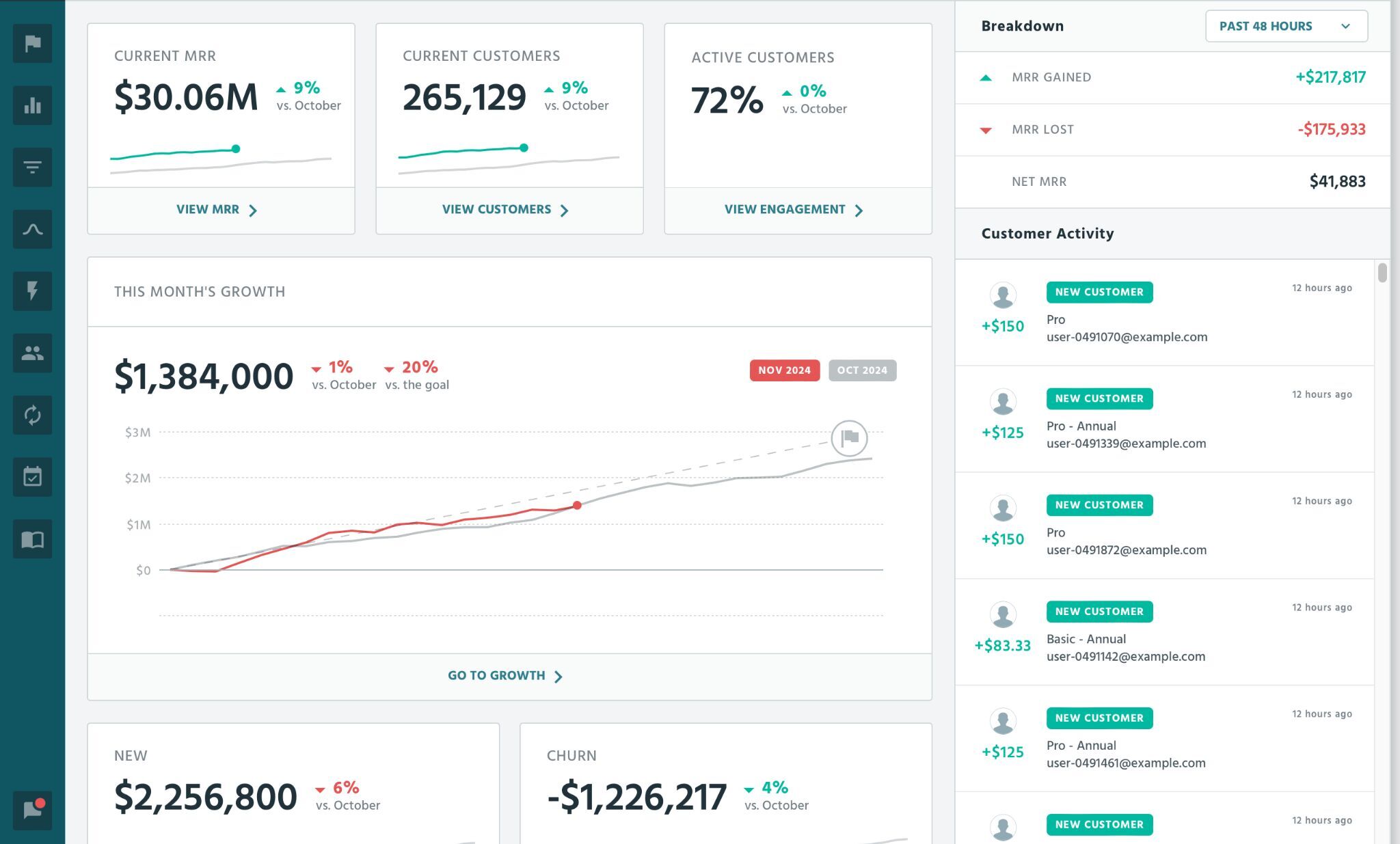
Revenue analytics. Track revenue along with your marketing campaigns to spot correlations. This is especially recommended for SaaS businesses and can be done with free tools like ProfitWell.
Similar Posts
15 Marketing Conferences to Attend in 2025
Conferences are a great excuse to meet other marketers, learn cutting-edge tactics, and just simply hang out and make friends! Even better if it’s on your company’s dime. Here are the marketing conferences we think are worth attending in 2025. Conference When Location Affiliate Summit East Aug. 4-5 New York, USA INBOUND Sep. 3-5 San Francisco, USA…
AI Can’t Replace SEO Tools. But It Can Use Them
Recently, a LinkedIn post claimed that you could replace paid SEO tools with just a handful of ChatGPT prompts and save $8,400 annually. The post exploded. 500+ likes, 400+ comments, and people are loving it. But SEOs didn’t. I can’t believe we’re still talking about this at the end of 2025. I want to believe…
I Ran an AI Misinformation Experiment. Every Marketer Should See the Results
I invented a fake luxury paperweight company, spread three made-up stories about it online, and watched AI tools confidently repeat the lies. Almost every AI I tested used the fake info—some eagerly, some reluctantly. The lesson is: in AI search, the most detailed story wins, even if it’s false. AI will talk about your brand no matter…
Answer Engine Optimization: How to Win in AI-Powered Search
Search is changing. People are no longer just “Googling it.” Increasingly, they’re asking AI systems for answers and getting them instantly without having to click and sift through different websites. SEO is still essential for brands to show up in these answers, but visibility now depends on more than rankings. What matters is whether your…
Tools and Tips to Successfully Organize Your Small Business
Tools and Tips to Successfully Organize Your Small Business Running a small business involves juggling multiple tasks, from managing finances to handling customer relationships. Staying organised is essential for efficiency, productivity, and growth. Below is a detailed guide to essential tools and actionable tips to help streamline your operations effectively. Essential Tools to Organize Your…
Generative Engines Are Breaking Web Analytics and Hurting Their Future
Search is moving from traditional search engines to generative engines, but traffic from many of these sites isn’t being tracked properly in analytics. It’s their fault, not yours. I was looking at our LLM filter in Ahrefs Web Analytics and noticed some common generative engines missing from the list. They’re in our filters, but we aren’t…