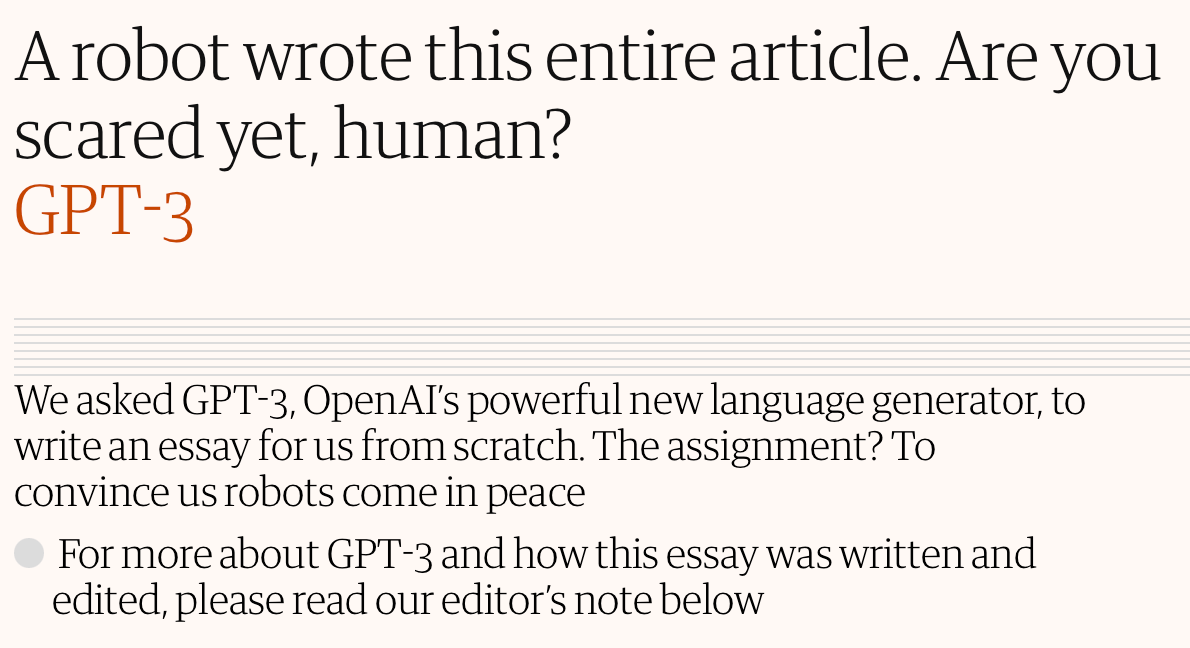
The pros are of using AI for content are obvious: content gets done faster, cheaper, and often technically better. But there are cons, too, like the fact that AI-generated content wears a stigma of cheating, a lazy shortcut. In fact, one study showed that most people would rather wait years for a lower-quality, human-written book than read a polished, AI-written one right now.
In this guide, I’ll show you everything you need to know about using AI to create content, while still feeling confident about it.
AI-generated images
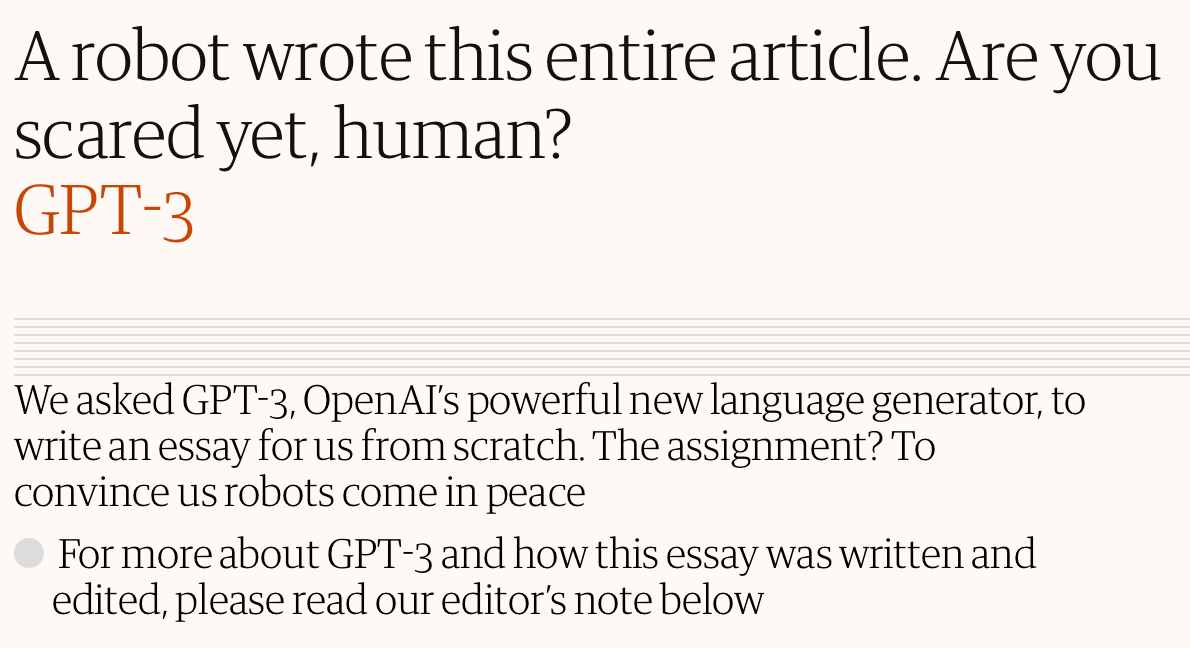
Fake photos of Pope Francis in a puffer jacket. These Midjourney-generated images of the Pope wearing a stylish white coat fooled millions on social media, becoming one of the most viral examples of AI imagery. The photos looked so realistic that major news outlets had to fact-check them.
AI-generated video
Kalshi’s AI commercial. This became the first fully AI-generated advertisement aired during a major sporting event. The entire ad—visuals, voiceover, and music—was created using AI tools, proving that AI content could meet broadcast television standards.
AI-generated interactive content
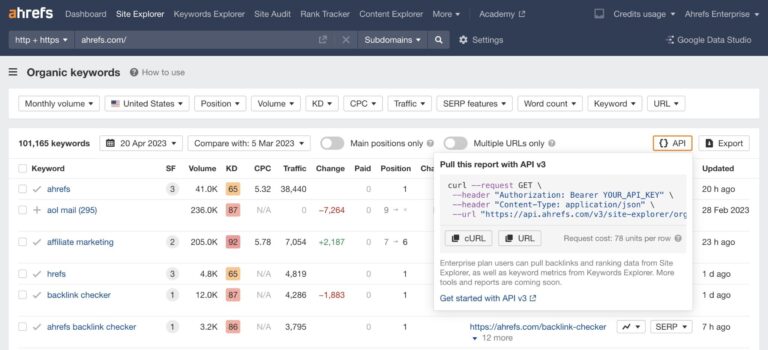
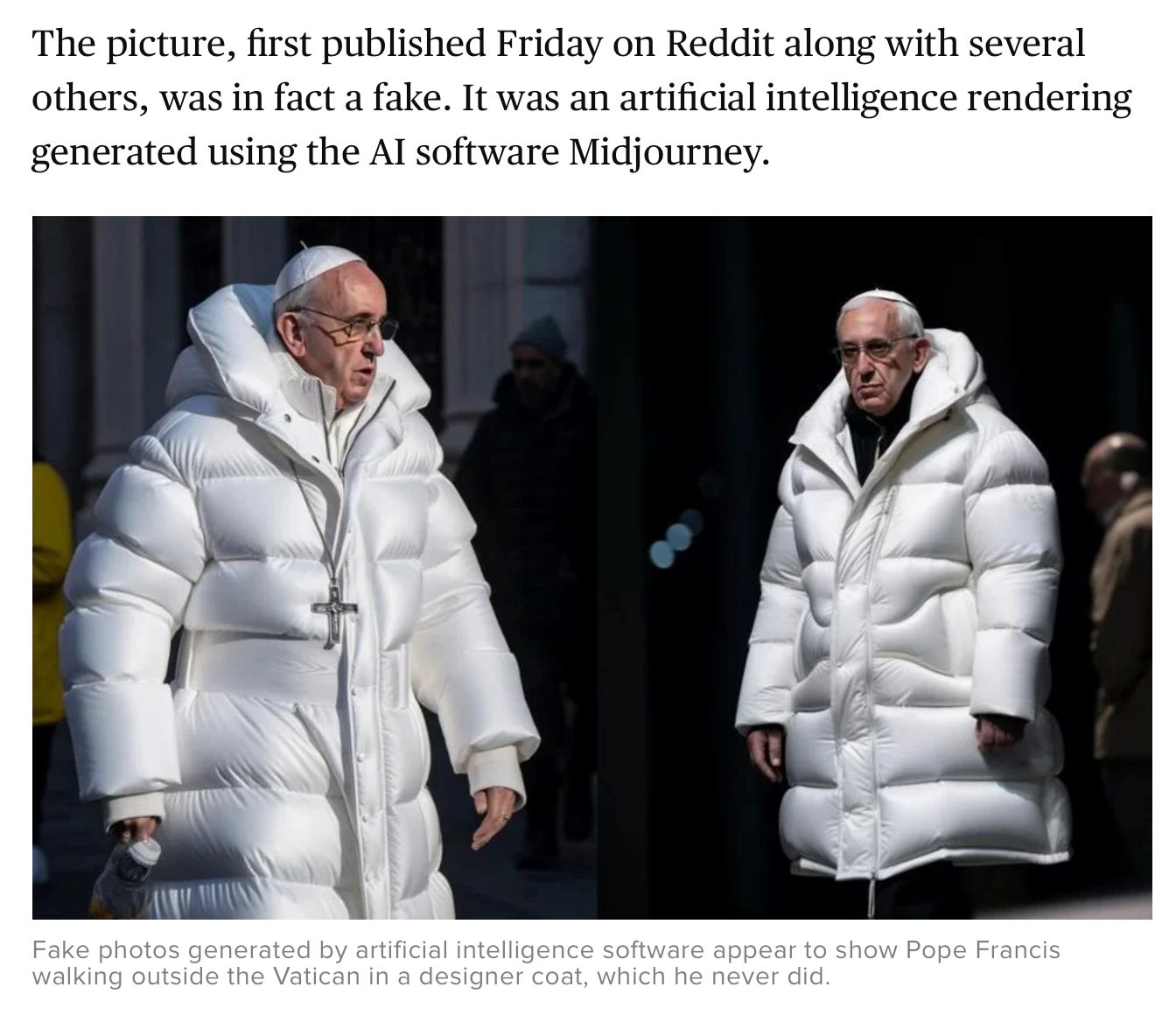
Model Context Protocols, or simply MCPs, had a big take off in 2025, marking the next step in the evolution of chatbots. To see how this works in practice, let’s look at Ahrefs’ MCP for Claude. With direct access to Ahrefs’ database, you can ask about keywords, backlinks, or traffic potential and get instant, reliable insights. The experience feels less like using a tool and more like chatting with an SEO expert who’s always on hand to answer your questions.
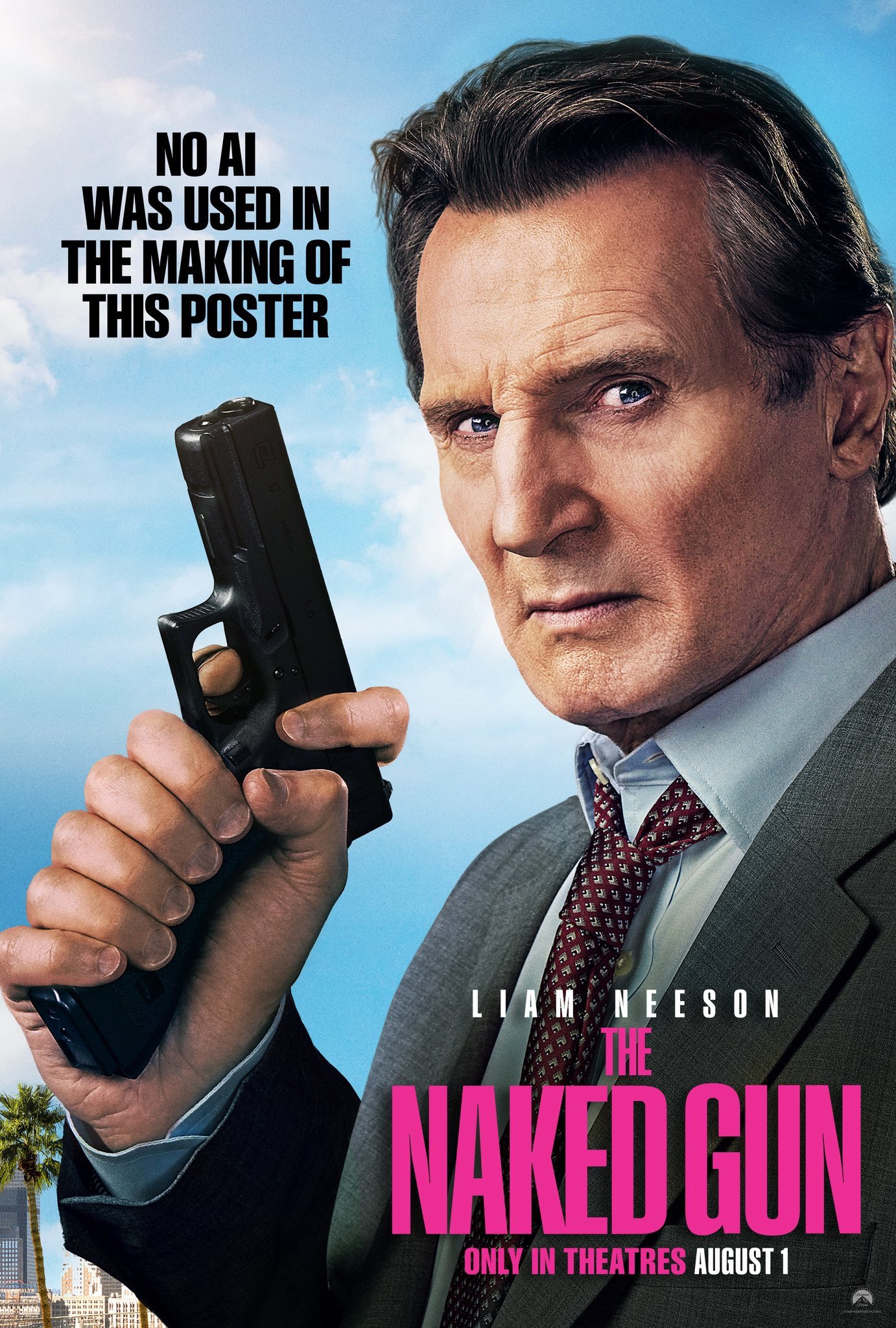
Good AI content that’s been edited and personalized by humans is becoming nearly impossible to detect. Tools that “humanize” AI writing by adding small errors or changing patterns can easily fool most detectors.
We already know that most people would claim they can spot AI content, but what about AI detectors? Well, they work okay under perfect conditions—around 80% accuracy. They often fail when tested on content different from the ones they were trained on, and they struggle with content that mixes AI and human writing (which is most good AI content).
And did you know that 74% of new website content is now AI-generated? It backs up my point from a recent rant: AI is on track to become as common in content creation as robots are in car factories.
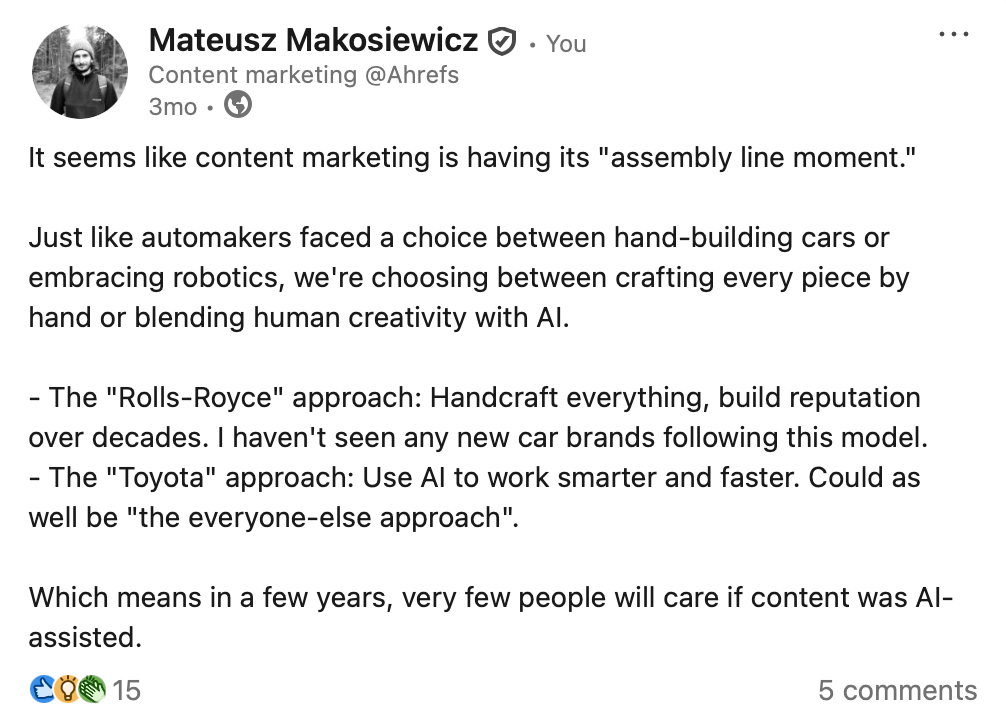
So, I’d say, don’t worry too much about detection. Focus on making your AI-assisted content genuinely useful and adding your own voice, experience, and insights. That’s what matters to your audience anyway.
Further reading
Here are the main takeaways.
AI adoption is massive
87% of marketing professionals now use AI for content creation.
Companies using AI are publishing 47% more content monthly and growing 5% faster than their competitors.
But here’s the important part: only 4% publish raw AI content. The other 97% are editing and reviewing everything, which explains why some AI content works while other stuff gets called out immediately.
What’s actually working
Most marketers use AI for blog content (87% use AI here), followed by website copy (64%) and social media (63%).
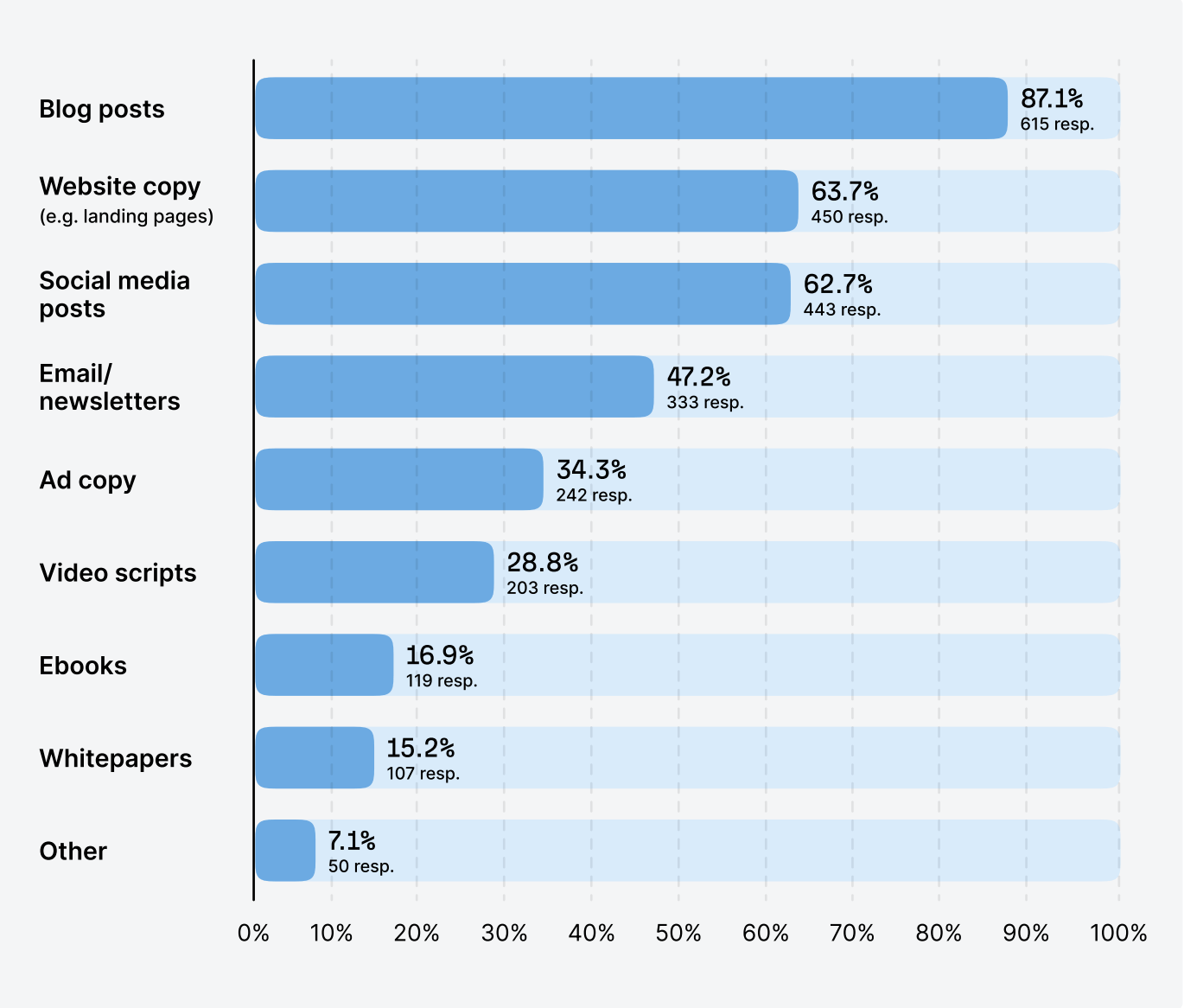
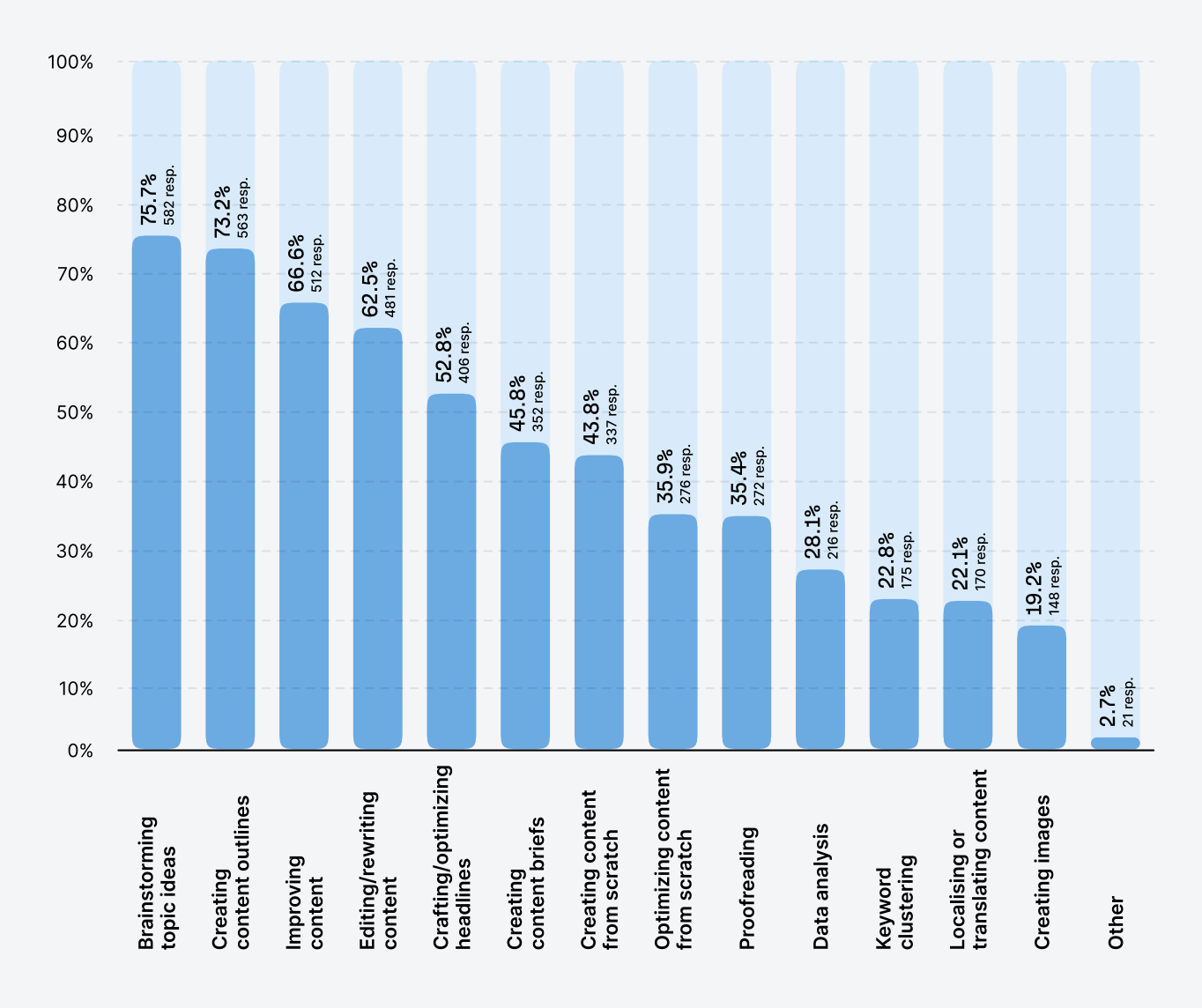
How exactly do they use it? More than half of respondents use it for brainstorming topics, creating outlines, editing, and optimizing headlines.
ChatGPT is the clear winner with 44% adoption among marketers, while Gemini and Claude trail behind at 15% and 10% respectively.
Are they happy with the results AI delivers?
65% believe human content is better quality, but 34% think AI and human content rank roughly the same in search. AI content is slightly more likely to get Google manual penalties but slightly less likely to be hurt by algorithm updates.
Despite mixed performance, 51% plan to increase AI spending next year.
And, the cost difference is impossible to ignore: human-only content averages $611 per article versus $131 for AI-assisted content.
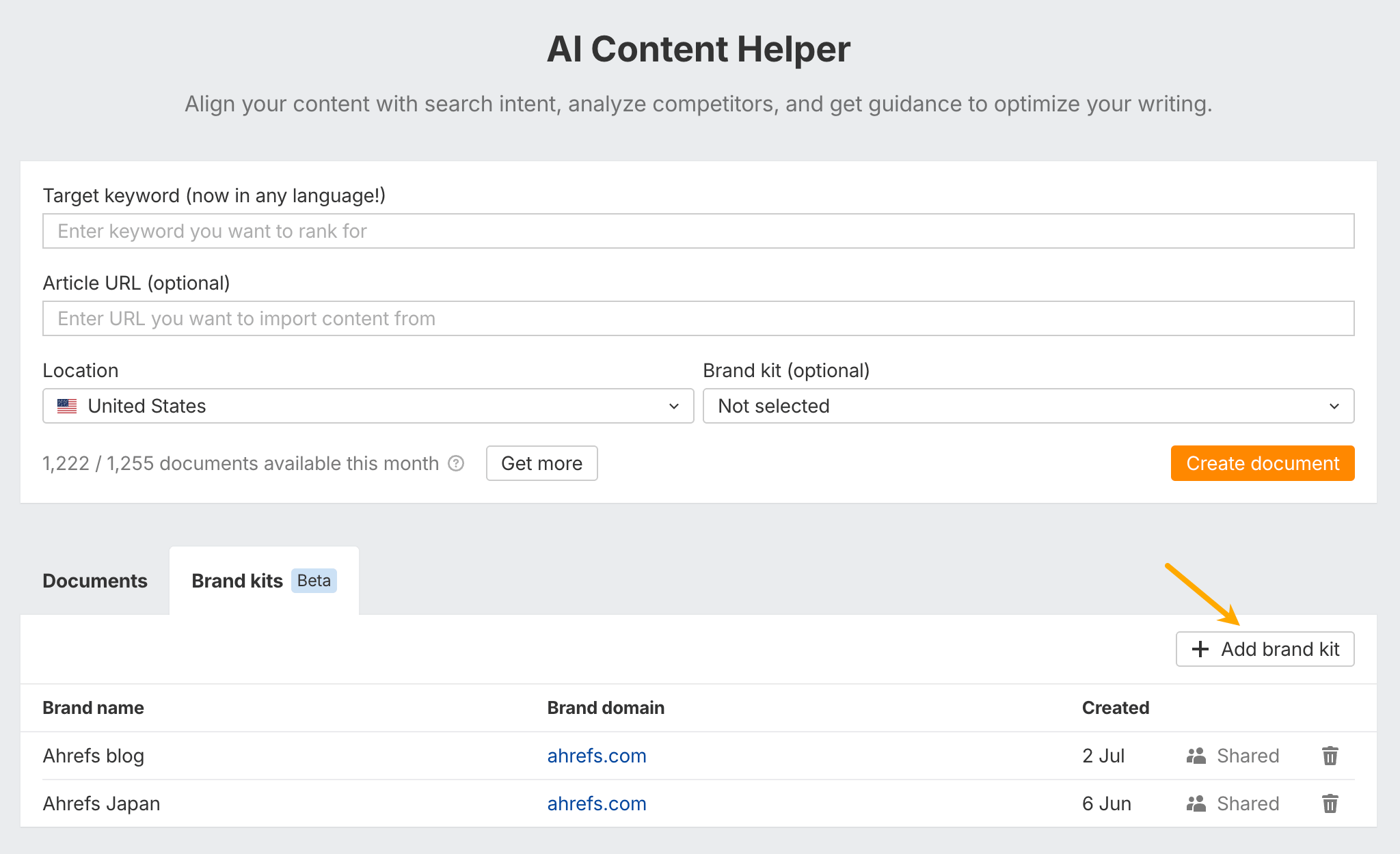
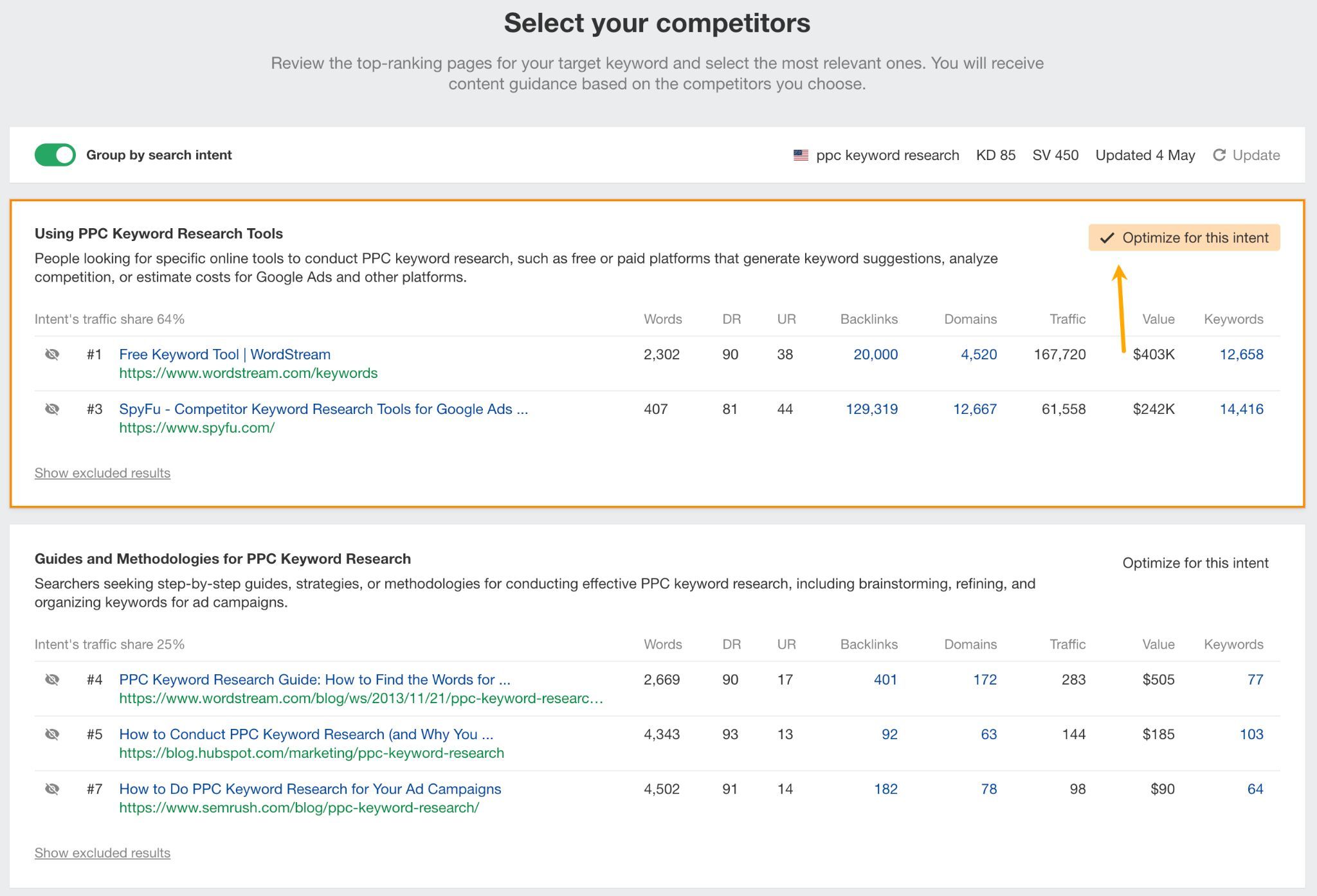
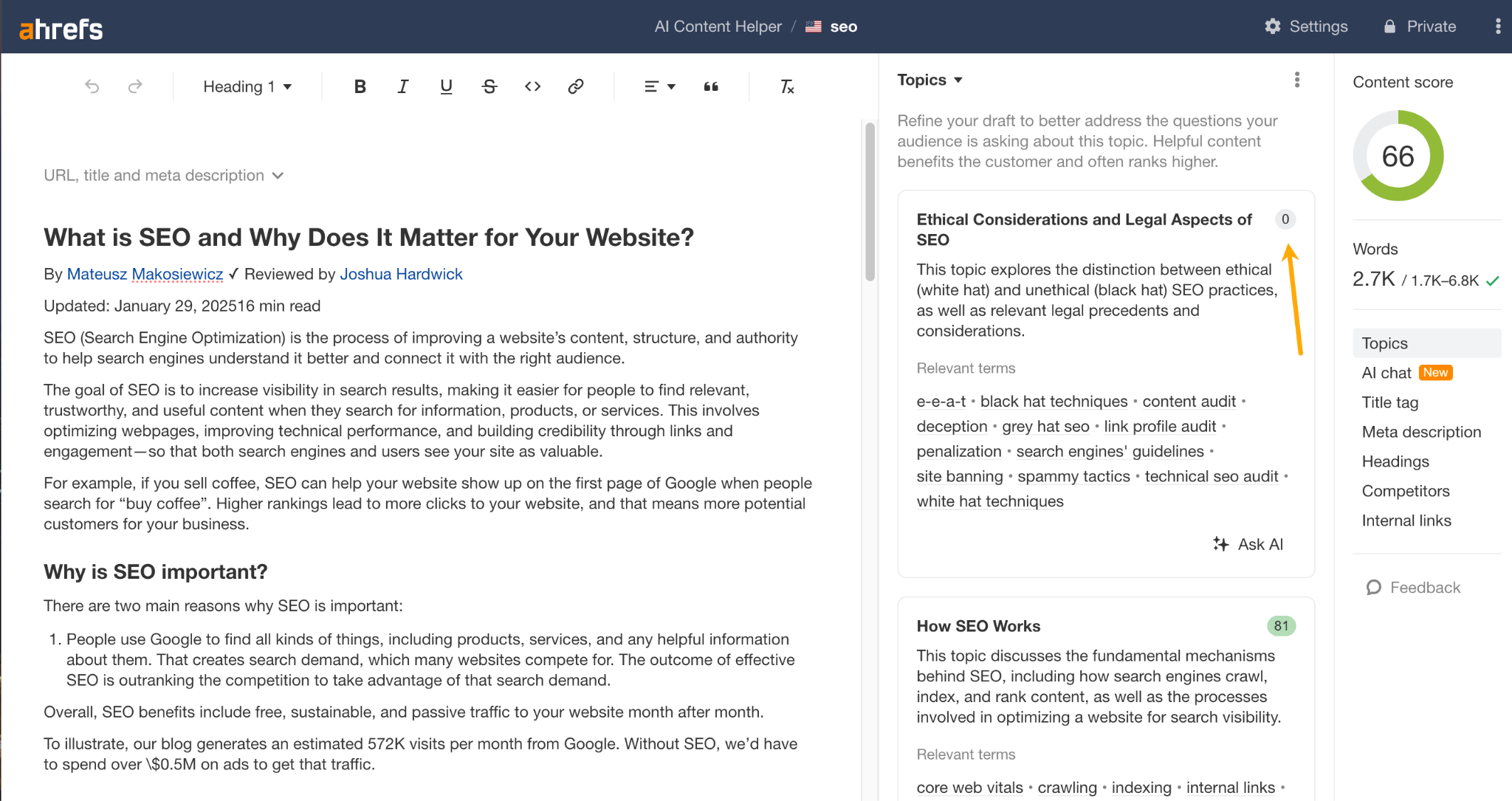
Then, the tool maps out exactly which topics and subtopics I need to cover in any new article—or shows what’s missing in an existing article—by analyzing what’s actually ranking in the top 10 and a coverage score.
Other tools (with genuinely useful use cases)
Humans discovered AI that can make virtually anything, and they also discovered the AI paradox:

The more AI-generated content floods in, the less people seem to truly want it. So, maybe instead of just listing tools, let me share some genuinely cool use cases of AI content you can actually copy and the tools you’ll need to pull them off.
- Video hooks with Nano Banana.
- Animated product photos with Adobe Firefly.
- Humorous video ads with the latest models you can find on a platform like OpenArt. Somehow, AI cringe goes down surprisingly well when it’s served with a side of humor.
- Localized educational or product marketing videos with HeyGen.
- Ad variations and formats (in no time) with a tool like AdCreative.
- Vibe-coded online tools with Claude, like this one: AI vs Search Traffic Analysis.
- YouTube thumbnails to test ideas or cut costs when you’re just starting out with tools like Canva or Pikzels.
- Short-form content made from longer videos for YouTube Shorts, TikTok, and more with tools like Riverside or Opus.
- Animated inserts that highlight an important point or bring a story in your video to life with a tool like OpenArt.
- Last but not least, AI voiceovers are amazing these days. Try ElevenLabs.
Similar Posts
13 Technical Marketing Skills You Can Learn (Even If You’re Not Technical)
Many marketers hit limits not because they lack ideas, but because they can’t execute or scale them. Not everyone has the luxury of developers, designers, or analysts who can help turn big ideas into reality. Even if you do, you still need to compete for time and help with the rest of your organisation. But times…
15 AI Content Creation Tools to Add to Your Tech Stack
We’re not exactly short on AI content creation tools as we head into 2025—in this list, you’ll see some ol’ faithfuls, and some that are hot-off-the-shelf. In any case, they are 15 of my top finds, complete with example workflows and use cases. Here they are, in no particular order: ChatGPT is an AI chatbot that…
AI Overviews Reduce Clicks by 34.5%
Google says AI Overviews increase clicks. Cold, hard logic disagrees, and so does our research. We analyzed 300,000 keywords and found that the presence of an AI Overview in the search results correlated with a 34.5% lower average clickthrough rate (CTR) for the top-ranking page, compared to similar informational keywords without an AI Overview. Thanks…
SEO for Financial Services: How to Build Trust and Rank Higher in 2025
This guide is designed to help financial institutions of all sizes navigate the unique challenges of increasing visibility in Google Search — from local credit unions and solo advisors to national investment firms and fintech platforms. We’ll walk through practical strategies to help you earn trust, demonstrate expertise, attract qualified leads, and stay compliant. The…
How to Get Customers (There Are Only 4 Ways)
Getting customers is the lifeblood of any business. But search for “how to get customers,” and you’ll find yourself flooded with advice, tips, and tactics. It’s hard to know which one to choose, considering that you have limited resources. Fortunately, most strategies on how to get customers boil down to these four fundamental methods: Find…