India’s telecommunications ministry has ordered major mobile device manufacturers to preload a government-backed cybersecurity app named Sanchar Saathi on all new phones within 90 days.
According to a report from Reuters, the app cannot be deleted or disabled from users’ devices.
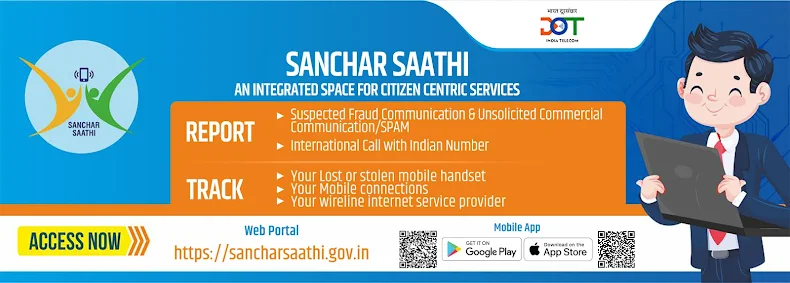
Sanchar Saathi, available on the web and via mobile apps for Android and iOS, allows users to report suspected fraud, spam, and malicious web links through call, SMS, or WhatsApp; block stolen handsets; and allow a mobile subscriber to check the number of mobile connections taken in their name.
One of its important features is the ability to report incoming international calls that start with the country code for India (i.e., +91) to facilitate fraud.
“Such international calls are received by illegal telecom setups over the internet from foreign countries and sent to Indian citizens disguised as domestic calls,” the government notes on the website. “Reporting about such calls helps the Government to act against illegal telecom exchanges which are causing financial loss to the Government’s exchequer and posing a threat to national security.”

The Android and iOS apps have been collectively installed over 11.4 million times, with a majority of the installations from the Indian states of Andhra Pradesh and Maharashtra. Since its launch in May 2023, the service has blocked more than 4.2 million lost devices, traced 2.6 million of them, and successfully recovered about 723,638 devices.
The Google Play Store listing for Sanchar Saathi’s Android app says it can view network connections, run at startup, control vibration, and request access to the following services –
- SMS (Read/send SMS messages)
- Phone (Read call log and phone status and identity)
- Photos/Media/Files (Read contents of USB storage and modify or delete them)
- Storage (Read contents of USB storage)
- Camera (Take pictures and videos)
- Device ID & call information (Read phone status and identity)
The November 28, 2025, directive, per Reuters, requires manufacturers to push the app to phones that are already in the supply chain via a software update. The government has framed the app as necessary to tackle threats facing telecom cybersecurity, including spoofed IMEI numbers that can be used to facilitate scams and network misuse.
In a press statement, the Ministry of Communications said the pre-installation is required to safeguard citizens from buying non-genuine handsets and enable easy reporting of suspected misuse of telecom resources. Manufacturers are also required to ensure that the application is readily visible and accessible to end users at the time of first use or device setup and that its functionalities are not disabled or restricted.
“Mobile handsets bearing duplicate or spoofed IMEI pose serious endangerment to telecom cybersecurity,” the Ministry added. “Spoofed/Tampered IMEIs in telecom networks lead to situations where the same IMEI is working in different devices at different places simultaneously and pose challenges in action against such IMEIs.”
“India has a big second-hand mobile device market. Cases have also been observed where stolen or blacklisted devices are being re-sold. It makes the purchaser abettor in crime and causes financial loss to them. The blocked/blacklisted IMEIs can be checked using the Sanchar Saathi App.”
Will it Go the Way of Russia’s MAX?
With the latest move, India has joined the likes of Russia, which mandated the pre-installation of a homegrown messenger app called MAX on all smartphones, tablets, computers, and smart TVs sold in the country starting September 1, 2025. Critics have claimed the app can be used to track users, although state media have dismissed those accusations as false.

Russian authorities have since announced partial restrictions on voice and video calls in messaging apps Telegram and WhatsApp to counter criminal activity, with state communications watchdog Roskomnadzor threatening to block WhatsApp completely if the messaging platform fails to comply with Russian law.
According to the agency, WhatsApp was being used to organize and carry out terrorist activities, to recruit perpetrators, as well as for fraud and other crimes against Russian citizens.
As of late October 2025, data from the independent monitoring project Na Svyazi shows that access to Telegram and WhatsApp has been restricted in about 40% of Russia’s regions. Roskomnadzor said the restrictions were due to criminal activity, such as fraud and extortion, and involving Russian citizens in sabotage and terrorist activities.