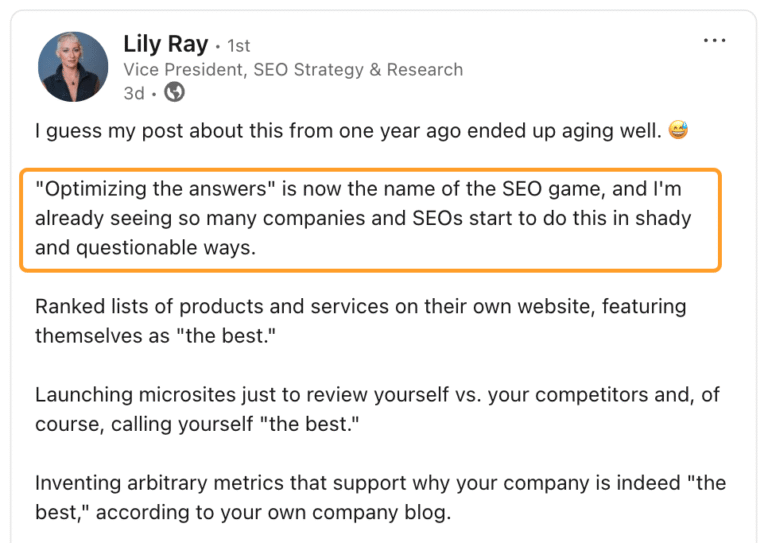
Given OpenAI’s close relationship with Microsoft, many expect that ChatGPT’s retrieval-augmented generation (RAG) process would use Bing.
However, over the past months, some SEOs discovered that ChatGPT may have secretly pivoted to using Google instead.
These were all one-off experiments. So, I wondered if it was possible for us to find out the ‘truth’ using data instead.
Here’s what we found.
- She pulled the actual search queries ChatGPT made (“fan-out queries”) and the URLs it returned from those searches. This data is from our Ahrefs Brand Radar.
- She then ran those exact same search queries through Google to see what URLs Google would return
- She measured how often ChatGPT’s returned URLs appeared in Google’s top 10, top 20, and anywhere in Google’s search results.
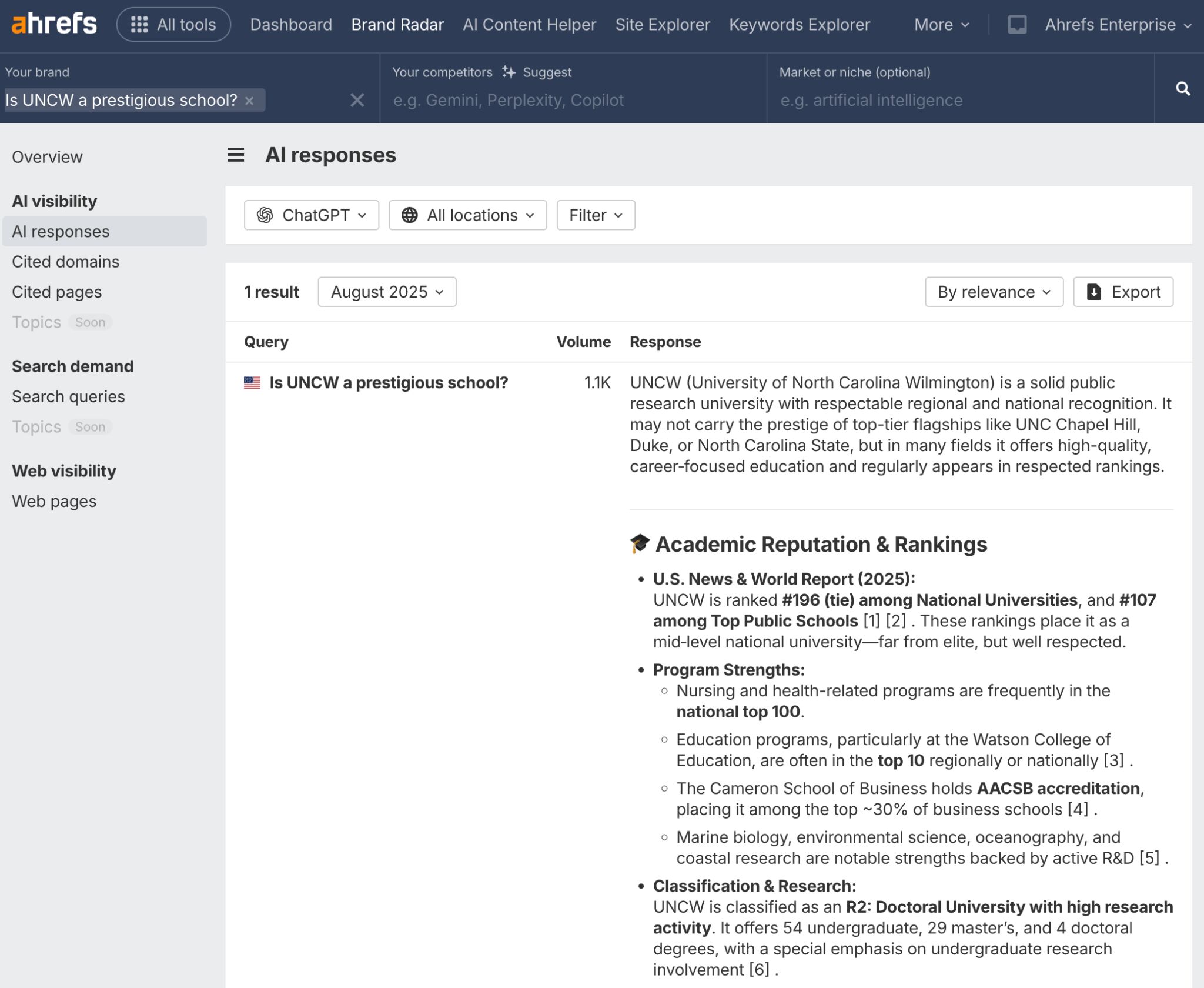
On average, ChatGPT pulls 1.78 search queries per prompt, with 75% of prompts triggering exactly two searches.
Similar Posts
You Can’t Track AI Like Traditional Search. Here’s What to Do Instead.
Traditional search tracking is built on a simple promise: type a query, get a result, and track your ranking. AI doesn’t work that way. Assistants like ChatGPT, Gemini, and Perplexity don’t show fixed results—they generate answers that vary with every run, every model, and every user. “AI rank tracking” is a misnomer—you can’t track AI like you…
AI Traffic Has Increased 9.7x in the Past Year
Though still <1% of total traffic, it’s now our highest converting channel at 10%+ CVR (going by our new custom event tracking in Web Analytics). I wanted to see if other sites were experiencing any AI traffic growth–especially now that zero-click search has taken hold. We decided to update the findings of our March AI traffic…
How to Rank for a Keyword (8 Steps)
You have a target keyword. You want to have your website appear in the search results for that keyword. How do you do that? How do you actually rank for a keyword? Follow this guide to find out how. keyword research guide ranks for 2,100 keywords: Most of them are simply variations of the main topic…
17 Proven SaaS Marketing Strategies From 11 CMOs & Founders
Over the past year, we interviewed top SaaS founders and marketing executives on the Ahrefs Podcast. We asked them about strategies that helped them scale. From Crypto.com to Airwallex, Paddle, and Surfer, these battle-tested methods have fueled growth in competitive markets with limited resources. In this article, we share their best insights so you can apply…
UX and SEO: A Guide for Winning the Searcher, Not Just the SERP
UX and SEO are interconnected in more ways than many people realize. User interactions, also called UX signals or user signals, include things like clicks, scrolls, swipes, and mouse hovers. These now play a major role in how Google ranks content and which brands gain more visibility in search results. Here’s everything you need to…
LLMO Is in Its Black Hat Era
We’ve seen this before. A new technology rises. Visibility becomes a new currency. And people—ahem, SEOs—rush to game the system. That’s where we are with optimizing for visibility in LLMs (LLMO), and we need more experts to call out this behavior in our industry, like Lily Ray has done in this post: If you’re tricking, sculpting,…